
 Podman DesktopLinux
vs
Docker Desktop for WindowsWindows
Podman Desktop como alternativa Linux ao Docker Desktop for Windows
Atualizado em
Nossa avaliação
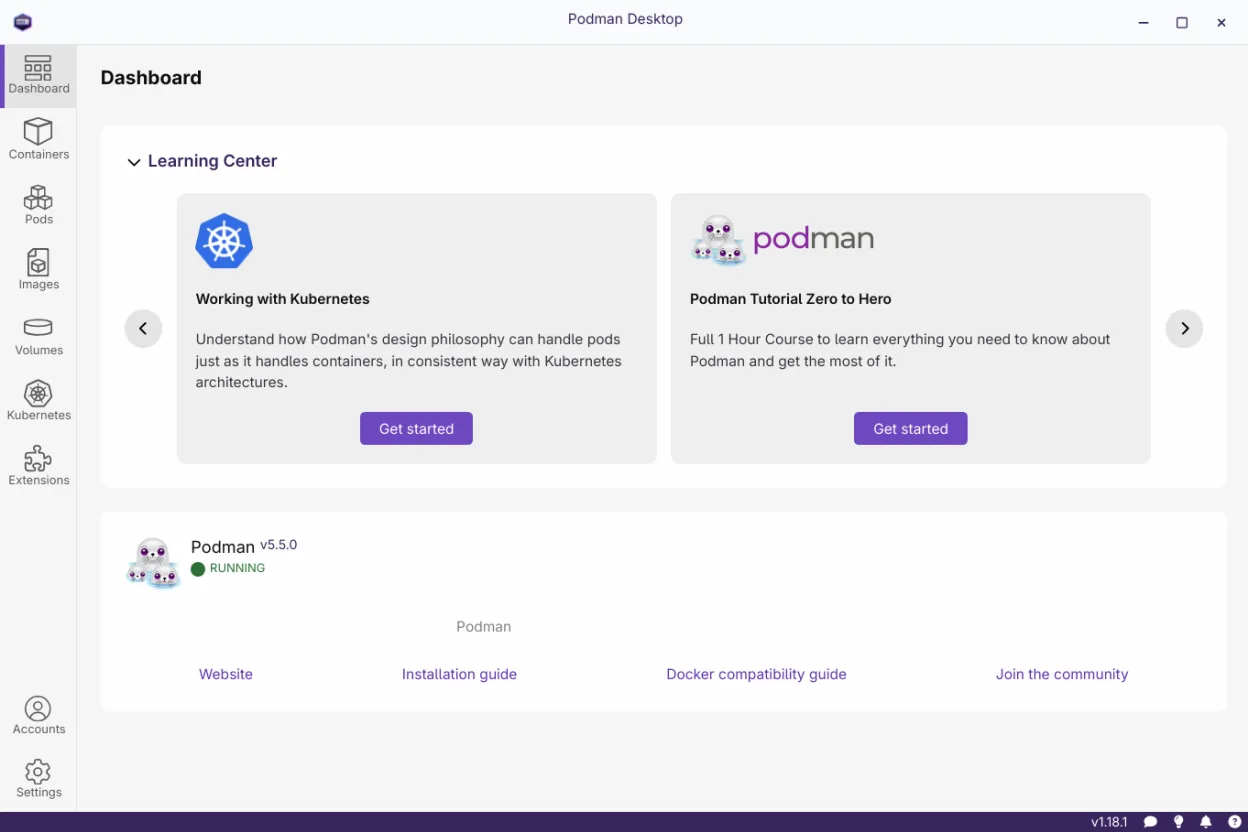
Podman Desktop is a solid replacement for Docker Desktop on Linux, especially for users who want rootless containers and daemonless operation without sacrificing GUI convenience. It supports image builds, container management, logs, and terminal access through a clean interface. If you're on Linux and want to avoid Docker's licensing issues and root requirements, Podman Desktop delivers most day-to-day functionality. It's ideal for developers who value security and lightweight operation, though some may miss Docker-specific integrations or polished enterprise features.
- Licença
- Apache-2.0
- Preço
- Grátis
- Versão mais recente
- 1.31.0 (18 de novembro de 2026)
- Avaliação
- —
O que funciona igual
- Graphical interface for managing containers, images, and pods
- Supports building from Dockerfile and Containerfile
- Terminal access and log inspection for running containers
- Push/pull images to OCI-compliant registries
- Plugin support, including Docker Desktop extensions
O que muda
- No requirement for a daemon, reducing overhead and improving security
- Rootless by design, avoiding sudo or root privileges
- Systemd integration is possible but less automated than Docker Desktop
- Proxy and resource configuration in Podman Desktop is still a work in progress
- No built-in Kubernetes cluster (relies on external or user-managed clusters)
Abrindo seus arquivos do Docker Desktop for Windows
Podman Desktop reads Dockerfile and Containerfile directly, so projects created for Docker Desktop work without changes. Image builds and container configurations using standard OCI formats are fully compatible. You can import and run containers from Docker registries without conversion. However, Docker Desktop-specific project files or exported containers in Docker-specific formats may not transfer directly if they rely on Docker-only features or Windows-specific volumes and networking.
Trocando o Docker Desktop for Windows pelo Podman Desktop, passo a passo
- Install Podman and Podman Desktop using your distro's package manager or Flathub
- Import existing Docker images using 'podman import' or pull from registries
- Use Podman Desktop to build, run, and manage containers via GUI
- Configure registries and proxies in Podman Desktop settings
- Enable systemd integration manually for auto-starting containers
- Test Docker extensions or plugins for compatibility
Principais recursos do Podman Desktop
- Construir imagens a partir de Containerfile ou Dockerfile
- Puxar e enviar imagens para registries OCI
- Iniciar, parar, reiniciar contêineres e pods
- Acesso ao terminal dentro dos contêineres
- Inspecionar logs e uso de recursos
- Gerenciar múltiplos motores de contêiner (Podman, Docker, Lima)
- Configurar registries e configurações de proxy
- Suporte a plug‑ins e extensões do Docker Desktop
Como instalar o Podman Desktop no Linux
flatpak install flathub io.podman_desktop.PodmanDesktopsudo apt install libpodsudo apt install podmansudo dnf install podmansudo pacman -S podman-dockersudo zypper install podmanPerguntas frequentes
Can Podman Desktop run Docker images?
Yes, Podman Desktop can pull, run, and manage Docker images because it supports the OCI standard, which Docker also uses. No conversion is needed.
Does Podman Desktop require Docker to be installed?
No, Podman Desktop works independently with Podman. It can also connect to Docker if installed, but Docker is not required.
Is Kubernetes support built-in?
Podman Desktop supports deploying to Kubernetes, but you need a separate Kubernetes cluster (e.g., Minikube, OpenShift, or k3s) — it doesn't include one like Docker Desktop does.