
 OpenRGBLinux
vs
MSI Mystic LightWindows
OpenRGB als Linux-Alternative zu MSI Mystic Light
Aktualisiert am
Unser Fazit
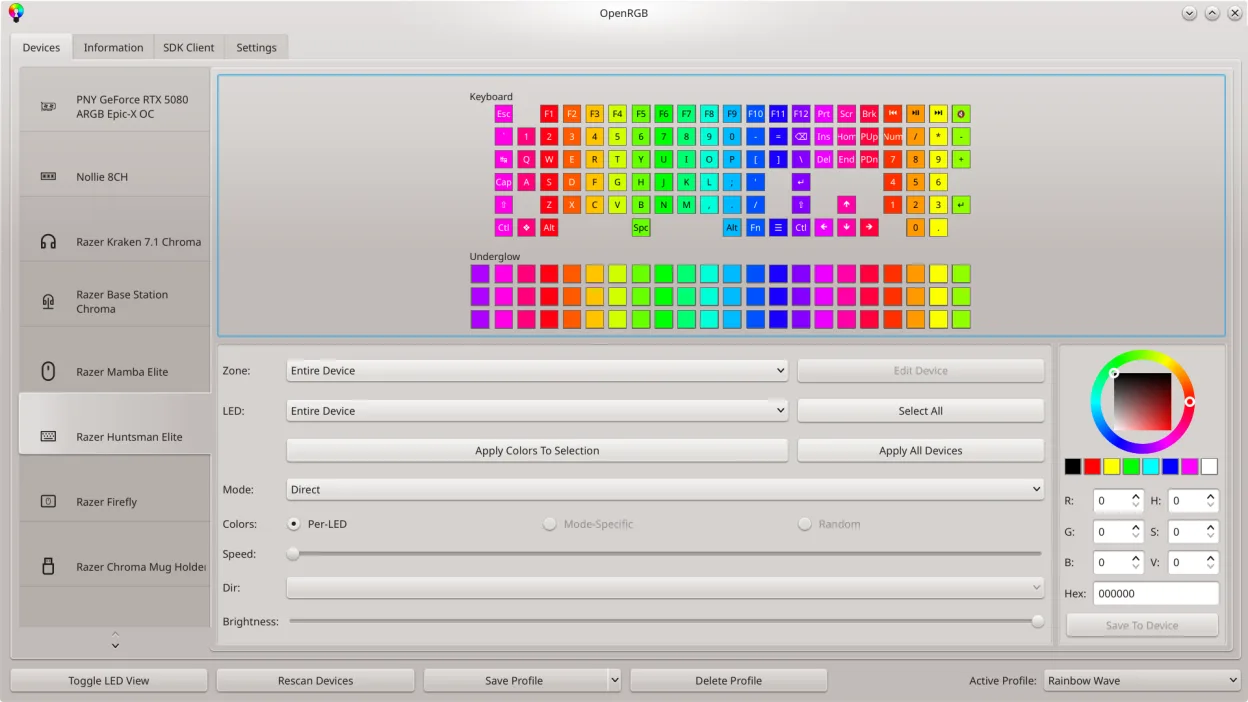
OpenRGB is a good replacement for MSI Mystic Light if you're running Linux and want full control over MSI RGB hardware without relying on Windows. It supports MSI motherboards and graphics cards, allows real-time color and effect customization, and syncs lighting across devices—just like Mystic Light. Power users benefit from scripting via CLI and profile sharing. While the interface isn't as polished, the functionality is there. It's ideal for Linux users who value open-source tools and want to avoid vendor lock-in.
- Lizenz
- GPL-2.0-or-later
- Preis
- Kostenlos
- Aktuelle Version
- 1.1 (16. Oktober 2026)
- Bewertung
- —
Was gleich funktioniert
- Controls RGB lighting on MSI motherboards and GPUs in real time
- Supports custom colors, modes, and lighting effects
- Synchronizes lighting across multiple devices
- Runs natively without requiring Windows
- Allows saving and loading of lighting profiles
Was anders ist
- No dependency on MSI software or accounts
- Cross-platform (works on Linux, Windows, macOS), not Windows-only
- Lacks official MSI branding and proprietary UI
- No built-in online account integration or cloud profiles
- Advanced features like LED mapping and CLI scripting not in Mystic Light
Ihre MSI Mystic Light-Dateien öffnen
OpenRGB does not support importing MSI Mystic Light profile files directly. The two programs use incompatible formats, and no conversion tool exists. However, you can recreate profiles manually in OpenRGB by setting the same colors and effects. Once created, OpenRGB profiles can be saved and reused. If you have existing lighting setups in Mystic Light, expect to reconfigure them from scratch on Linux.
Von MSI Mystic Light zu OpenRGB wechseln – Schritt für Schritt
- Install OpenRGB from your distro’s repo or Flathub
- Shut down Windows and disable Fast Startup to avoid USB conflicts
- Boot into Linux and launch OpenRGB
- Let it auto-detect connected MSI RGB devices
- Configure colors, effects, and save custom profiles
- Enable the OpenRGB daemon to restore settings at boot
Wichtige Funktionen von OpenRGB
- Farben und Effekte für viele RGB‑Geräte steuern
- Eigene Profile speichern und laden
- SDK für Drittanbieter‑Integration
- Befehlszeilenschnittstelle für Skripting
- Mehrfachinstanz‑Synchronisation über PCs
- Eigenständiger Client/Server‑Modus
- Grafische LED‑Karte für Musterdesign
- Geräte‑Info‑Viewer
OpenRGB unter Linux installieren
flatpak install flathub org.openrgb.OpenRGBsudo dnf install openrgbsudo pacman -S openrgbsudo zypper install OpenRGBHäufige Fragen
Does OpenRGB work with all MSI motherboards?
Most modern MSI motherboards with addressable RGB headers are supported, but compatibility varies by model. Check the OpenRGB GitHub for a full device list.
Can I control MSI GPU lighting with OpenRGB?
Yes, OpenRGB supports RGB control on many MSI graphics cards, including control over fan and logo lighting.
Is OpenRGB safe to use on my hardware?
Yes. It operates within hardware limits and doesn’t overclock. It only controls lighting, so it won’t damage your system.