
 GNU EmacsLinux
vs
AtomWindows
GNU Emacs como alternativa Linux a Atom
Actualizado el
Nuestra opinión
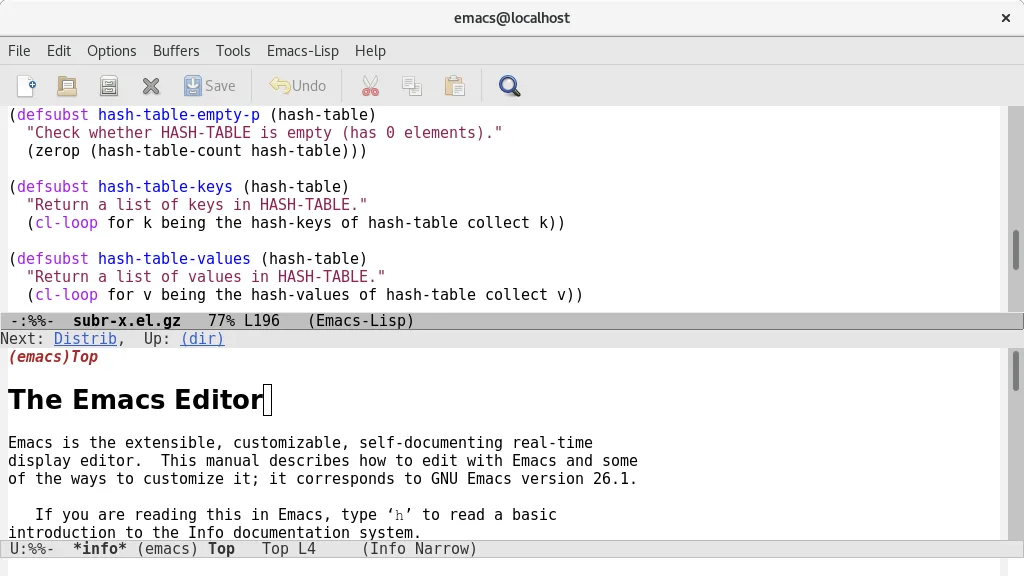
GNU Emacs is a capable replacement for Atom, but the transition is steep. It offers superior extensibility through Emacs Lisp and excellent built-in tools, covering syntax highlighting, Git, and themes. However, it lacks Atom's modern, out-of-the-box UI and has a steeper learning curve. It is ideal for users willing to invest time in configuration or those who value a single, all-in-one environment. It is not recommended for users seeking a quick, low-friction switch without reading documentation.
- Licencia
- GPL-3.0+ and GFDL-1.3+
- Precio
- Gratis
- Última versión
- 31.1 (24 de agosto de 2026)
- Valoración
- —
Lo que funciona igual
- Open-source and free to use
- Extensible via plugins or packages
- Syntax highlighting for many languages
- Integrated Git version control support
- Highly customizable interface and themes
Lo que cambia
- Emacs requires learning Emacs Lisp for deep customization, whereas Atom used JavaScript/HTML/CSS
- Emacs has a steeper initial learning curve with fewer default visual cues
- Atom is discontinued, while Emacs is actively maintained by the Free Software Foundation
- Emacs includes built-in mail, news, and calendar features not present in Atom
- Emacs startup can be slower if heavily loaded with packages, though core is fast
Abrir tus archivos de Atom
Emacs opens standard text files, source code, and project directories directly, so your codebase remains accessible. Atom's configuration files (.atom directory) are not directly compatible and must be recreated. If you used specific Atom packages, you will need to find equivalent Emacs packages or write custom Lisp functions. There is no direct import tool for Atom settings.
Pasar de Atom a GNU Emacs, paso a paso
- Install GNU Emacs via your distribution's package manager or Flathub.
- Install the Magit package for Git integration.
- Install a theme package like solarized or monokai to match your previous look.
- Install language-specific modes or packages for syntax highlighting if not built-in.
- Read the built-in Emacs tutorial to learn basic keybindings.
- Customize your init file to load packages and set preferences.
Funciones clave de GNU Emacs
- Intérprete Emacs Lisp incorporado para una personalización total
- Modos de edición sensibles al contenido con resaltado de sintaxis
- Interfaz de depurador integrada y gestión de proyectos
- Soporte completo de Unicode para casi todos los idiomas humanos
- Lector de correo y noticias integrado
- Documentación y tutoriales integrados y exhaustivos
- Altamente personalizable mediante código o interfaz gráfica
Cómo instalar GNU Emacs en Linux
flatpak install flathub org.gnu.emacssudo apt install emacssudo apt install emacssudo dnf install emacssudo pacman -S emacs-waylandsudo zypper install emacsPreguntas frecuentes
Is Emacs difficult to learn?
Yes, it has a steep learning curve. The interface is minimal by default, and many features require understanding Emacs Lisp. However, the built-in tutorial helps new users get started.
Can I use Git in Emacs like in Atom?
Yes, via Magit, which is a powerful Git frontend for Emacs. It is highly regarded and offers more control than Atom's built-in Git tools.
Does Emacs have a plugin system like Atom?
Yes, Emacs uses a package manager (ELPA) to install extensions. These are written in Emacs Lisp, so they are more powerful but require knowledge of Lisp to modify or create new ones.
Otras 5 alternativas a Atom
 Visual Studio CodeUn editor de código ligero y extensible que admite depuración, Git y muchos lenguajes.GratisFlatpakVisual Studio Code vs Atom
 NeovimNeovim es un fork moderno de Vim que añade extensibilidad, soporte avanzado para interfaces de usuario y…Código abiertoGratisFlatpakNeovim vs Atom
 KateKate es un editor de texto con muchas funciones, orientado a programadores, de KDE, con soporte para más de…Código abiertoGratisFlatpakKate vs Atom
 geditgedit es el editor de texto ligero y de propósito general de GNOME, adecuado para notas, documentos y edición…Código abiertoGratisFlatpakgedit vs Atom
 GeanyGeany es una IDE ligera y rápida que admite muchos lenguajes y complementos de serie.Código abiertoGratisFlatpakGeany vs Atom