
 Bambu StudioLinux
vs
3D BuilderWindows
Bambu Studio as a Linux alternative to 3D Builder
Updated
Our verdict
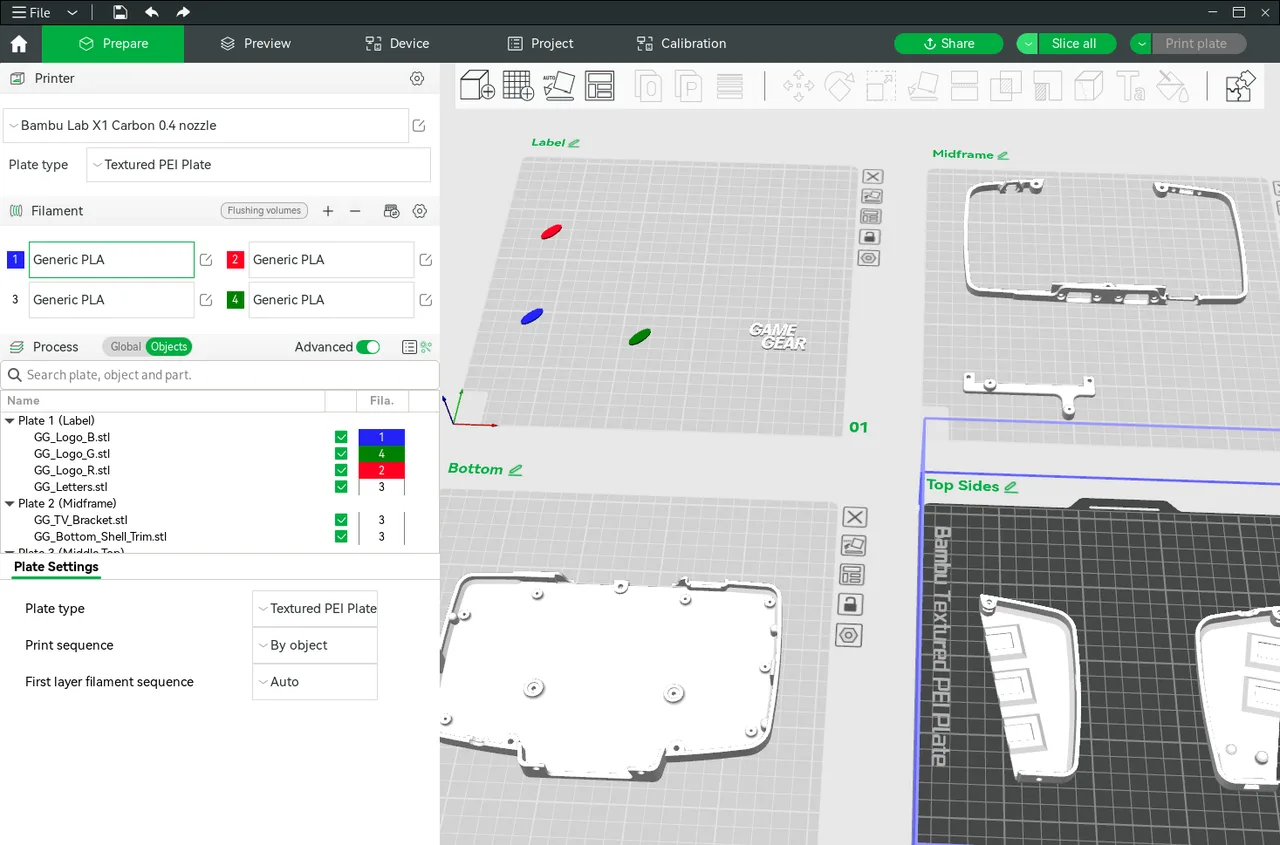
Bambu Studio is a strong replacement for 3D Builder if your primary goal is preparing models for 3D printing. It handles the core slicing and G-code generation tasks that 3D Builder’s limited mesh editing tools often struggle with. However, it is not a direct 1:1 swap for casual mesh manipulation. If you rely heavily on 3D Builder’s simple 'repair' or 'combine' tools for non-printing purposes, you will find Bambu Studio’s interface more complex and focused on print parameters rather than basic geometry editing. It is best suited for users who want to move from casual viewing to serious print preparation.
- License
- AGPL-3.0-only
- Price
- Free
- Latest version
- 2.9.1 Public Release (November 3, 2026)
- Rating
- —
What works the same
- Supports importing and exporting STL and OBJ files
- Allows basic transformation of models (scale, rotate, position)
- Provides visual preview of the final print layers
- Generates G-code for 3D printers
- Available as a free, open-source application
What is different
- Lacks the simple, one-click 'repair' tools for non-manifold geometry found in 3D Builder
- Interface is significantly more complex, focusing on print settings rather than basic mesh editing
- Does not support PLY file import/export as a primary workflow
- Requires more setup for non-Bambu printers compared to 3D Builder's generic support
- No direct 'combine' tool for merging meshes without using external plugins or scripts
Opening your 3D Builder files
Bambu Studio natively supports STL and OBJ files, which are the primary formats used by 3D Builder. You can directly open STL files exported from 3D Builder and slice them. However, Bambu Studio does not natively support PLY or 3MF in the same way 3D Builder does for general viewing. If you have complex 3D Builder projects saved in proprietary formats, you may need to export them as STL first. G-code generated by Bambu Studio is standard and compatible with most printers, but it will not be directly readable by 3D Builder, which is not a slicer.
Switching from 3D Builder to Bambu Studio, step by step
- Install Bambu Studio via Flatpak or your distribution's package manager.
- Export your 3D models from 3D Builder as STL or OBJ files.
- Open Bambu Studio and create a new project.
- Import your STL/OBJ files into the workspace.
- Configure your printer profile and material settings.
- Slice the model and export the G-code for your printer.
Key features of Bambu Studio
- Project‑based workflow with reusable templates
- Optimized slicing algorithms for speed and quality
- Comprehensive material settings
- Integrated support for Bambu Lab printers
- Export to G‑code and STL
- Customizable keyboard shortcuts
- Cross‑platform distribution via Flatpak
- Detailed layer preview
How to install Bambu Studio on Linux
flatpak install flathub com.bambulab.BambuStudioFrequently asked questions
Can I repair broken meshes in Bambu Studio like in 3D Builder?
No, Bambu Studio does not have the simple 'repair' button. You will need to use external tools like Meshmixer or Blender to fix non-manifold geometry before importing into Bambu Studio.
Does Bambu Studio work with non-Bambu printers?
Yes, it supports many other FDM printers, but the interface is heavily optimized for Bambu Lab printers. You may need to manually configure profiles for other brands.
Is Bambu Studio suitable for viewing 3D models?
It is primarily a slicer. While you can view models, it is not as user-friendly for casual viewing as 3D Builder or dedicated viewers like MeshLab.
4 other alternatives to 3D Builder
 BlenderBlender is a free, open-source 3D suite for modeling, animation, rendering, and video editing.Open sourceFreeFlatpakBlender vs 3D Builder
 FreeCADFreeCAD is an open‑source parametric 3D CAD modeler for design, engineering and 3D printing.Open sourceFreeFlatpakFreeCAD vs 3D Builder
 MeshLabFree, open-source tool for processing, cleaning, and editing 3D triangular meshes, ideal for 3D printing prep.Open sourceFreeFlatpakMeshLab vs 3D Builder
 Wings 3DWings 3D is an open‑source advanced subdivision modeler for Linux.Open sourceFreeFlatpakWings 3D vs 3D Builder