
 VLC media playerLinux
vs
VLC media playerLinux
vs
 Media Player Classic (MPC)Windows
VLC media player als Linux-Alternative zu Media Player Classic (MPC)
Aktualisiert am
Unser Fazit
VLC is a solid replacement for Media Player Classic (MPC) for most users, especially those who value format compatibility and cross-platform support. It handles common audio and video files without extra codecs, supports subtitles, playlists, and keyboard shortcuts, and runs on Linux natively. While it uses slightly more memory and has a more modern interface, its core playback functionality matches MPC’s. Users who rely on lightweight performance and a minimalist UI may need to adjust, but VLC’s flexibility and reliability make it a strong everyday player.
- Lizenz
- GPL-2.0+
- Preis
- Kostenlos
- Aktuelle Version
- 3.0.23 (1. Januar 2026)
- Bewertung
- —
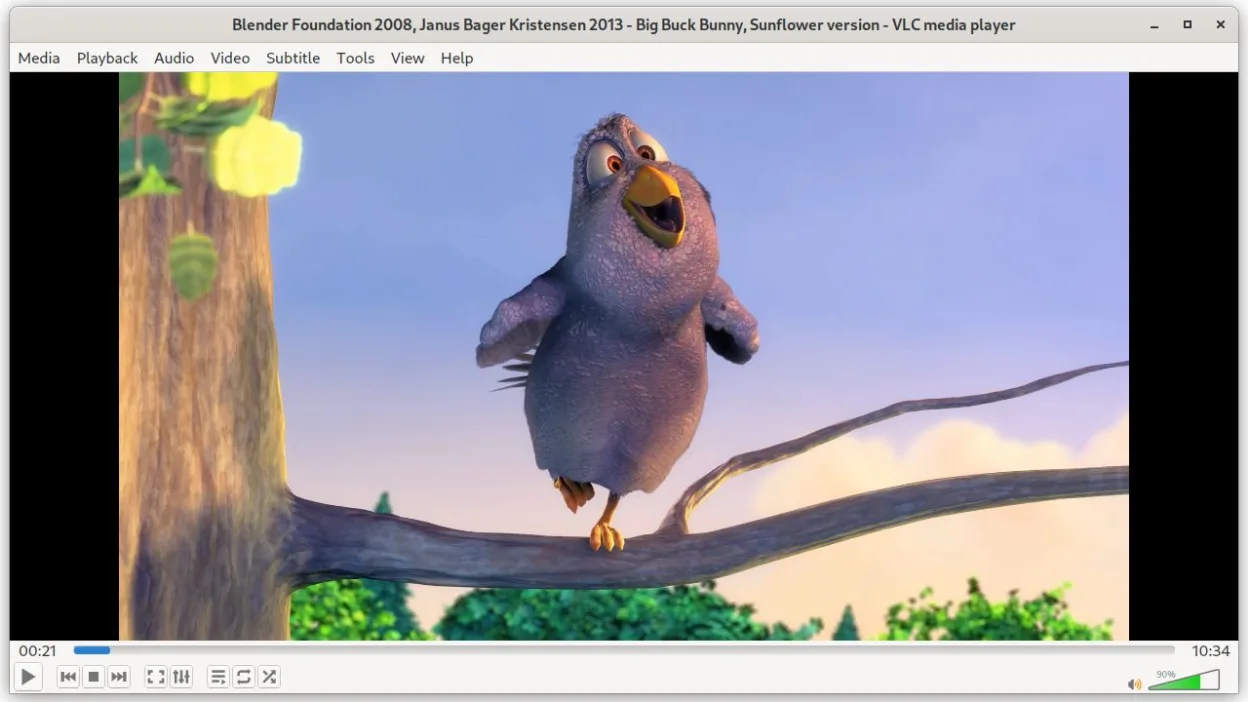
Was gleich funktioniert
- Plays common video and audio formats without installing additional codecs
- Supports subtitle loading and synchronization during playback
- Handles playlists for continuous playback of media files
- Offers extensive keyboard shortcuts for transport and volume control
- Runs efficiently with low CPU usage on most systems
Was anders ist
- VLC’s default interface is more modern and less 'classic' than MPC’s minimal design
- Uses slightly more memory than MPC, though still lightweight by modern standards
- Lacks native support for MPC’s custom configuration files and window layout settings
- Does not have built-in frame-accurate seeking in all formats like MPC-HC with certain renderers
- Plugin system exists but is less used compared to MPC’s madVR and LAV filter ecosystem
Ihre Media Player Classic (MPC)-Dateien öffnen
VLC can open most media files that MPC plays, including AVI, MKV, MP4, MP3, and FLAC, without extra setup. It reads standard playlist formats like M3U and XSPF, so existing MPC playlists usually work. VLC does not use MPC’s configuration files (.ini) or player-specific project files, so settings won’t transfer directly. If you used MPC to save custom playback lists or window states, those must be recreated manually in VLC.
Von Media Player Classic (MPC) zu VLC media player wechseln – Schritt für Schritt
- Install VLC via your distribution’s package manager or Flathub
- Copy your media files and existing playlists (e.g., M3U) to accessible directories
- Enable subtitle auto-loading in Preferences > Subtitles
- Customize keyboard shortcuts under Tools > Preferences > Hotkeys
- Set default audio and video outputs based on your setup
Wichtige Funktionen von VLC media player
- Plays most audio and video formats out of the box
- Supports DVDs, Audio CDs, VCDs and network streams
- Built‑in subtitle support with synchronization
- Media conversion and basic editing
- Streaming server capabilities
- Extensible via plugins and skins
- Command‑line interface for scripting
VLC media player unter Linux installieren
flatpak install flathub org.videolan.VLCHäufige Fragen
Can VLC play DVDs like MPC did?
Yes, VLC can play DVDs, including encrypted ones, if libdvdcss is installed. Most Linux distributions require you to install this separately due to licensing.
Does VLC support hardware acceleration?
Yes, VLC supports VA-API on Linux for video decoding. Enable it in Input/Codecs settings to reduce CPU usage during HD playback.
Can I make VLC look more like MPC?
Not exactly, but you can use minimal skins or switch to the Qt interface with hidden panels to achieve a cleaner, simpler layout.
3 weitere Alternativen zu Media Player Classic (MPC)
 MplayerMPlayer is a free, command‑line media player that supports a wide range of formats and codecs.Open SourceKostenlosMplayer vs. Media Player Classic (MPC)
 TotemTotem (GNOME Videos) is the default GNOME video player built on GStreamer.Open SourceKostenlosTotem vs. Media Player Classic (MPC)
 Gnome MPlayerGnome MPlayer is a lightweight GUI frontend for MPlayer, designed for GNOME desktops.Open SourceKostenlosEingestelltGnome MPlayer vs. Media Player Classic (MPC)