
 GNOME System MonitorLinux
vs
Process HackerWindows
GNOME System Monitor como alternativa Linux a Process Hacker
Actualizado el
Nuestra opinión
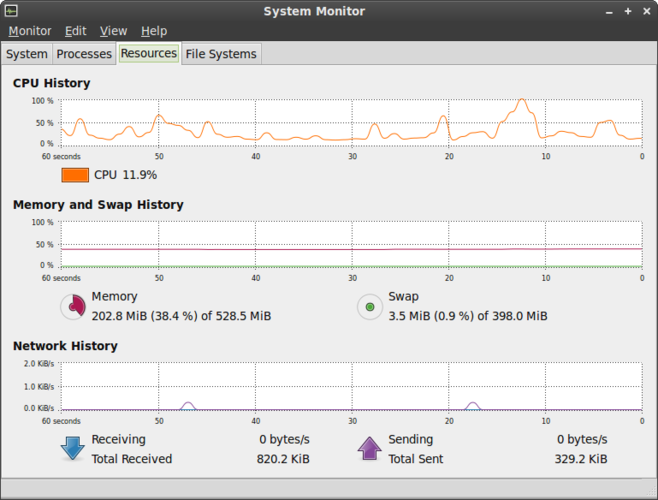
GNOME System Monitor is a solid, lightweight replacement for basic Process Hacker needs, especially if you prefer a clean, integrated desktop experience. It handles standard process listing, CPU/memory monitoring, and killing tasks effectively. However, it lacks the deep forensic capabilities of Process Hacker, such as detailed thread inspection, open file handles, and advanced network connection mapping. If you only need to check resource usage and end unresponsive apps, this is sufficient. If you rely on Process Hacker for debugging, security analysis, or detailed system introspection, you will find GNOME System Monitor too limited and should look at heavier tools like htop or specialized system utilities instead.
- Licencia
- GPL-2.0
- Precio
- Gratis
- Última versión
- 51.1
- Valoración
- 5/5 (1)
Lo que funciona igual
- Lists running processes with real-time CPU and memory usage
- Allows users to sort processes by resource consumption or name
- Provides functionality to kill or end running processes
- Displays system-wide performance metrics like load average and uptime
Lo que cambia
- Lacks detailed thread-level inspection and per-thread CPU usage
- Does not show open file handles or detailed network connection mappings
- Missing advanced process management features like priority adjustment or suspension
- Interface is simpler and less customizable than Process Hacker's multi-pane layout
Abrir tus archivos de Process Hacker
GNOME System Monitor does not import or export Process Hacker configuration files or saved process lists. It uses standard GNOME settings for its own configuration. If you have saved Process Hacker views or scripts, they will not transfer directly; you will need to manually recreate any custom monitoring setups within the Linux tool.
Pasar de Process Hacker a GNOME System Monitor, paso a paso
- Install GNOME System Monitor via your package manager (e.g., apt, dnf, pacman)
- Open the application to verify it launches correctly
- Familiarize yourself with the process list and sorting options
- Test the 'End Process' function on a non-critical task
- Check the 'Resources' tab for CPU and memory graphs
- Note that advanced features like file handles are not available
Funciones clave de GNOME System Monitor
- Listar todos los procesos en ejecución con uso de CPU y memoria
- Ordenar procesos por nombre, PID, usuario o consumo de recursos
- Ver información detallada de un proceso específico
- Terminar o matar procesos en ejecución
- Monitorear carga de CPU y memoria a nivel de sistema
- Mostrar tiempo de actividad y promedio de carga del sistema
- Mostrar visión general de la actividad de red
- Integrarse con el entorno de escritorio GNOME
Cómo instalar GNOME System Monitor en Linux
sudo apt install gnome-system-monitorsudo apt install gnome-system-monitorsudo dnf install gnome-system-monitorsudo pacman -S gnome-system-monitorsudo zypper install gnome-system-monitorPreguntas frecuentes
Can I see which files a process has open?
No, GNOME System Monitor does not display open file handles. For that, you need to use command-line tools like lsof or specialized system utilities.
Is it as feature-rich as Process Hacker?
No, it is much simpler. It covers basic monitoring and process management but lacks the deep system introspection and advanced debugging features found in Process Hacker.
Does it work on all Linux distributions?
Yes, it is available in major repositories including Debian, Ubuntu, Fedora, Arch, and openSUSE, making it a standard choice for GNOME-based systems.
Otras 4 alternativas a Process Hacker
 System Monitoring CenterSystem Monitoring Center es un monitor de bajo consumo y múltiples funciones para CPU, RAM, disco, red y GPU…Código abiertoGratisFlatpakSystem Monitoring Center vs Process Hackerhtophtop es un visor de procesos interactivo para sistemas tipo Unix, que reemplaza al antiguo comando top con…Código abiertoGratishtop vs Process Hackerbtopbtop es un monitor de sistema basado en terminal que visualiza el uso de CPU, memoria, disco y red en tiempo…Código abiertoGratisbtop vs Process HackerlsofA command-line utility that lists open files and associated processes, providing detailed system resource…Código abiertoGratislsof vs Process Hacker