
 PiTiViLinux
vs
Microsoft ClipchampWindows
PiTiVi como alternativa Linux a Microsoft Clipchamp
Actualizado el
Nuestra opinión
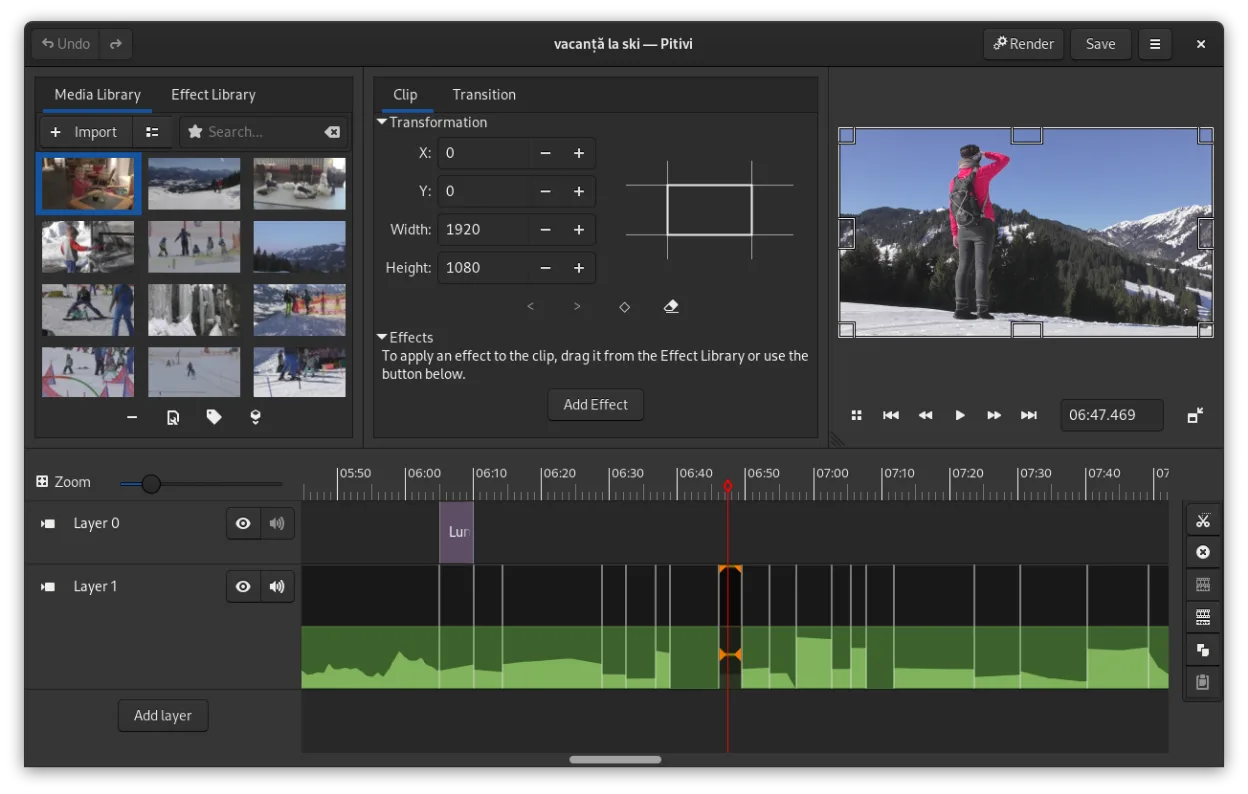
PiTiVi is a solid replacement for Microsoft Clipchamp if you're on Linux and want offline, no-watermark video editing without relying on a browser. It handles basic tasks like trimming, splitting, adding transitions, and text overlays cleanly. The interface is intuitive for beginners but also scales to more advanced use thanks to keyframing and timeline precision. However, it lacks built-in cloud export and has fewer preset effects than Clipchamp. If you value privacy, open-source software, and don't need web integration, PiTiVi works well for simple to mid-level projects.
- Licencia
- LGPL-2.0+
- Precio
- Gratis
- Última versión
- 2023.03 (26 de marzo de 2023)
- Valoración
- —
Lo que funciona igual
- Simple drag-and-drop timeline editing with visual clarity
- Supports basic transitions including crossfades
- Text overlay and audio track editing available
- Exports to common formats like MP4 and MOV
- Free to use with no forced watermarking
Lo que cambia
- PiTiVi is desktop-only and lacks Clipchamp's cloud-based workflow
- No built-in stock media library or online templates
- Fewer automated features like voice-over recording or auto-reframe
- Interface is GNOME-integrated but less flashy than Clipchamp's web UI
- No direct cloud export or rendering option
Abrir tus archivos de Microsoft Clipchamp
PiTiVi supports any format GStreamer can handle, which includes MP4, MOV, AVI, and more—common formats used in Clipchamp. You can import and edit Clipchamp-exported videos without issue. However, project files aren't interchangeable since Clipchamp saves online and PiTiVi uses its own project format. If you have raw media from Clipchamp, PiTiVi will work with it. Project continuity isn't possible, but media is compatible.
Pasar de Microsoft Clipchamp a PiTiVi, paso a paso
- Install PiTiVi via Flathub or your distro's package manager
- Copy your video clips, audio, and images to a local folder
- Open PiTiVi and create a new project
- Drag media into the timeline and edit as needed
- Export using built-in presets for MP4 or custom settings
Funciones clave de PiTiVi
- Edición no lineal con una línea de tiempo independiente de la velocidad de fotogramas
- Admite cualquier formato manejado por GStreamer
- Animación por fotogramas clave para efectos y filtros
- Edición ripple y roll para ajustes eficientes de la línea de tiempo
- Relaciones de aspecto, velocidades de fotogramas y preajustes de renderizado personalizados
- Fundidos cruzados y transiciones estándar SMPTE
- Paneles UI desmontables para configuraciones de varios monitores
- Flujo de trabajo no modal con diseño centrado en la cabeza de reproducción
Cómo instalar PiTiVi en Linux
flatpak install flathub org.pitivi.Pitivisudo apt install pitivisudo apt install pitivisudo dnf install pitivisudo pacman -S pitivisudo zypper install pitiviPreguntas frecuentes
Can I use PiTiVi without an internet connection?
Yes, PiTiVi runs entirely offline once installed. No internet is needed for editing or rendering.
Does PiTiVi add a watermark to exports?
No. PiTiVi is free and open-source, and does not add watermarks to any exported video.
Is PiTiVi harder to learn than Clipchamp?
It has a steeper initial curve for absolute beginners, but the layout is logical and efficient once you know basic timeline editing.
Otras 4 alternativas a Microsoft Clipchamp
 KdenliveKdenlive es un editor de video no lineal gratuito y con muchas funciones, basado en el framework MLT.Código abiertoGratisFlatpakKdenlive vs Microsoft Clipchamp
 OliveOlive es un editor de vídeo no lineal gratuito y de código abierto para Linux.Código abiertoGratisFlatpakOlive vs Microsoft Clipchamp
 ShotcutShotcut es un editor de video gratuito y de código abierto para Linux con soporte para una amplia gama de…Código abiertoGratisFlatpakShotcut vs Microsoft Clipchamp
 OpenShotOpenShot es un editor de vídeo no lineal gratuito, de código abierto, para Linux y otras plataformas…Código abiertoGratisFlatpakOpenShot vs Microsoft Clipchamp