
Windows · Accessories
Best Linux alternatives to Everything
Everything is a fast Windows file indexer; Linux users switch to Recoll, Catfish, or FSearch for similar speed.
Updated
Quick answer
The best Linux alternative to Everything is Recoll. Other strong options: Catfish, FSearch.
3 Linux alternatives to Everything
-

Recoll is a desktop‑wide full‑text search tool that indexes documents, archives, and email attachments.
Recoll is a strong alternative if you need deep content search, but it is not a direct speed match for Everything. Everything is a lightweight, real-time filename indexer; Recoll is a heavier full-text search engine that parses document contents. If your primary need is instant filename lookup…
Feature parity75% -
Catfish is a lightweight, cross‑platform file‑search utility that indexes and searches local files quickly.
Catfish can serve as a decent replacement for Windows Everything for users who need a lightweight, cross‑platform search tool that works on Linux. It offers real‑time, non‑blocking file name searches, optional database indexing for large directory trees, and a clean GUI that integrates with file…
Feature parity75% -
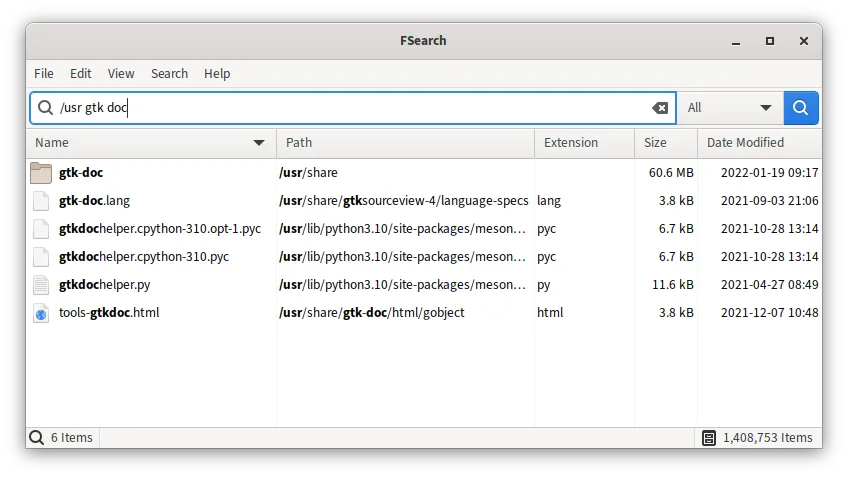
FSearch is a fast, graphical file and folder search tool for Linux.
FSearch is a good replacement for Everything if you primarily need fast, real-time file name searching on a local system with a clean GTK interface. It delivers near-instant results as you type, handles large directory trees well, and uses minimal resources. While it lacks Everything’s network…
Feature parity85%


What is Everything?
Everything is a lightweight desktop utility designed for users who need to locate files and folders by name instantly. It is popular among developers, system administrators, and power users who frequently search large directories. The tool indexes file names in real-time, allowing for near-instant results even on drives with millions of files, making it a staple in many Windows workflows.
The software is freeware, meaning it is free to download and use for both personal and commercial purposes. While the binaries are distributed under a permissive license similar to MIT, the source code is not open-source. There are no subscription fees or tiered pricing models; the single executable provides all features without restriction.
People seek Linux alternatives because Everything is exclusive to Windows and does not run natively on Linux systems. While Wine might make it possible, it is often unstable or inefficient for a background indexing service. Linux users prefer native solutions that integrate better with the file system, handle permissions correctly, and do not require compatibility layers to function reliably.
What a replacement for Everything must do
- Real-time file name indexing
- Instant search results
- Support for large directory trees
- Low system resource usage
- Graphical user interface
- Command-line interface option
Can you run Everything on Linux?
There is no native Linux version of Everything. The application is built specifically for the Windows API and does not have an official Linux port. You can attempt to run it using Wine or Proton, but performance and stability are often inconsistent, and it may not index files correctly due to permission differences. It is generally recommended to use native Linux tools instead of forcing a Windows binary to run.
Which alternative should you choose?
If you need the closest experience to Everything with a simple GUI, FSearch is a strong candidate due to its speed and modern interface. For users who want full-text search capabilities in addition to file names, Recoll is the better choice, as it indexes content inside documents. Catfish is a good middle ground, offering a simple GUI for file name searches without the complexity of full-text indexing. Choose based on whether you need content search or just fast name lookup.
Moving your Everything files and habits
There is no direct data export from Everything to Linux tools because Everything does not store a portable database that other apps can read. You will need to let the Linux alternative build its own index from scratch. This process takes time depending on your disk size, but once completed, your search history and saved searches are not transferable. You should verify that the new tool respects your file permissions and hidden files as expected.
Side-by-side comparison
Everything: frequently asked questions
Can I use Everything on Linux with Wine?
You can try, but it is not recommended. Wine compatibility for background indexing services is often poor, and it may cause system instability or fail to index files correctly due to Linux permission models.
Which tool is fastest for file name search?
FSearch and Recoll are both very fast. FSearch tends to be lighter and faster for pure file name searches, while Recoll is robust but heavier due to its full-text indexing capabilities.
Do these tools index file contents?
Recoll indexes file contents for full-text search. FSearch and Catfish primarily index file names and metadata, not the content inside the files.
Is the index stored on the disk?
Yes, all these tools store an index on your disk to enable fast search. The size of the index depends on the number of files on your system, typically ranging from a few megabytes to several gigabytes.
How important is Everything to you?
Know a better alternative? Suggest an alternative