
 Rocket.ChatLinux
vs
Microsoft Teams (Linux native)Windows
Rocket.Chat como alternativa Linux ao Microsoft Teams (Linux native)
Atualizado em
Nossa avaliação
Rocket.Chat can serve as a solid replacement for Microsoft Teams on Linux for organisations that value open‑source software, self‑hosting, and extensive customization. It covers the main collaboration needs—chat, audio/video calls, file sharing and basic document collaboration—though it lacks deep integration with the Microsoft 365 suite. Teams‑centric environments that rely heavily on Outlook calendar sync, SharePoint document co‑authoring, or built‑in compliance features may find Rocket.Chat lacking, while teams looking for a flexible, cost‑free solution will benefit.
- Licença
- MIT
- Preço
- Grátis
- Versão mais recente
- 4.19.3 (12 de novembro de 2026)
- Avaliação
- —
O que funciona igual
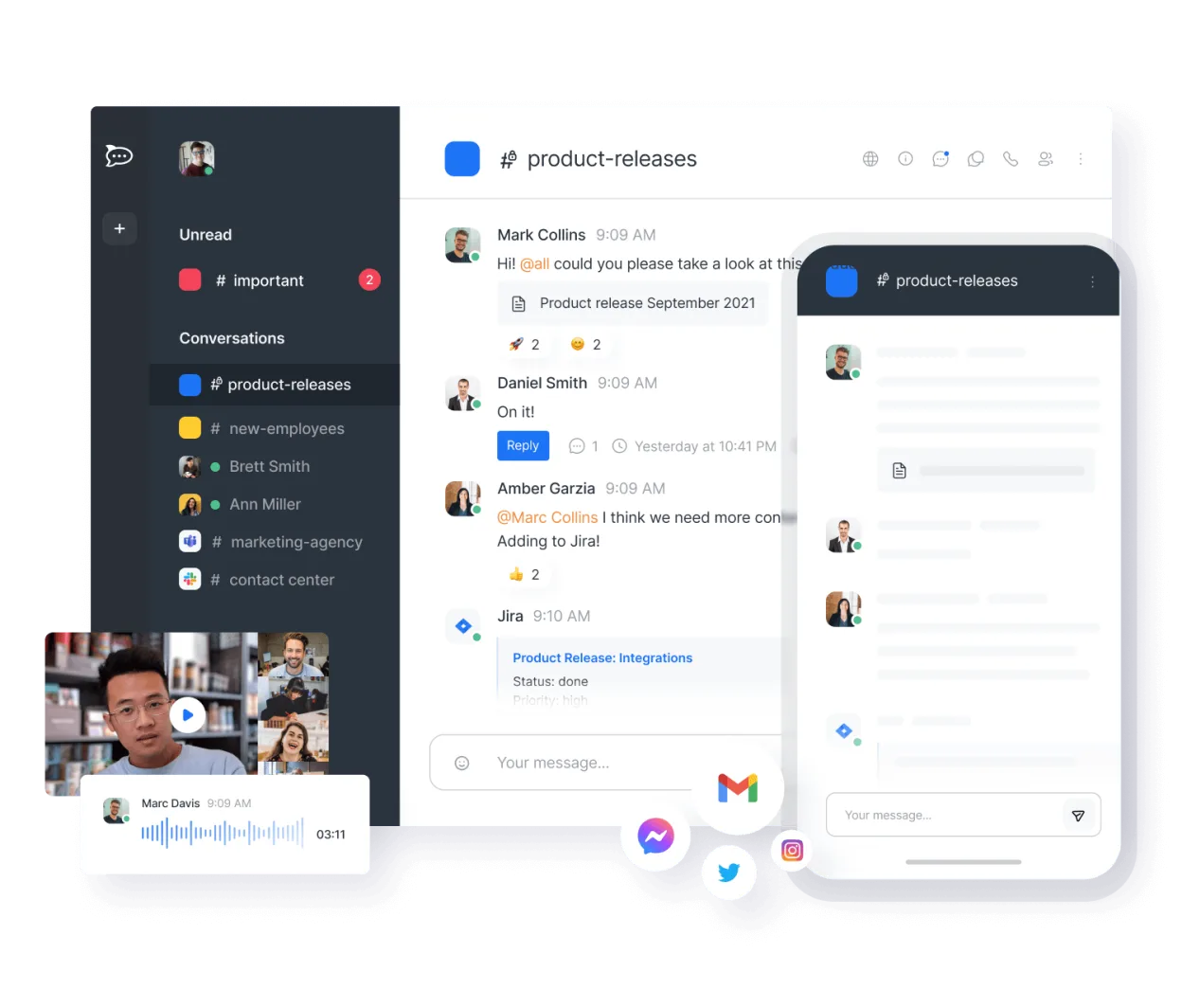
- Real‑time group chat with channels and direct messages
- Audio and video conferencing
- File sharing with preview support
- Mobile clients for iOS and Android
- Cross‑platform desktop clients (Linux, Windows, macOS)
O que muda
- No native integration with Microsoft 365 calendar, Outlook, or SharePoint
- Limited built‑in collaborative document editing compared to Teams' Office integration
- Enterprise‑grade compliance and e‑Discovery features are not provided out of the box
- Teams offers tighter control via Azure AD and Microsoft security policies, which Rocket.Chat must replicate via external plugins
- Video conferencing in Rocket.Chat may require additional server resources for large meetings
Abrindo seus arquivos do Microsoft Teams (Linux native)
Rocket.Chat can receive and store files that originate from Teams, but there is no direct import of Teams‑specific file formats or metadata. Exported Teams chat logs or meeting recordings will need to be handled manually, and any proprietary Teams file types (e.g., .teams) are not recognized. In practice you can upload the files to Rocket.Chat, but expect no automatic conversion or preservation of Teams‑specific attributes.
Trocando o Microsoft Teams (Linux native) pelo Rocket.Chat, passo a passo
- Set up a Rocket.Chat server (cloud or on‑premise) and create user accounts.
- Export Teams data (chat history, files) using Microsoft’s export tools or SharePoint download.
- Import files into Rocket.Chat channels via the web UI or bulk upload scripts.
- Recreate Teams channels as Rocket.Chat rooms and assign appropriate permissions.
- Configure authentication (e.g., LDAP, SSO) to match your existing directory.
- Notify users and provide brief training on Rocket.Chat UI and features.
Principais recursos do Rocket.Chat
- Usuários e canais ilimitados por padrão
- Conferência de vídeo e áudio
- Compartilhamento de arquivos e edição ao vivo de documentos
- API extensa e integrações de bots
- Criptografia de ponta a ponta para canais privados
- Opções auto‑hospedadas ou na nuvem
- Aplicativos móveis para iOS e Android
- Temas e layouts personalizáveis
Como instalar o Rocket.Chat no Linux
flatpak install flathub chat.rocket.RocketChatPerguntas frequentes
Can Rocket.Chat use my existing Microsoft 365 accounts for login?
Yes, you can connect Rocket.Chat to Azure AD or use SAML/LDAP to authenticate against the same directory, but the integration is not as seamless as Teams' native sign‑in.
Will video calls work with the same quality as Teams?
Video and audio work, but large group calls may need more server capacity, and some advanced Teams features like live captions are missing.
Is there a way to sync my Outlook calendar with Rocket.Chat?
Rocket.Chat does not provide built‑in calendar sync; you would need a third‑party integration or custom bot to pull events from Outlook.
Outras 4 alternativas ao Microsoft Teams (Linux native)
 SlackO Slack é um aplicativo proprietário de comunicação para equipes no Linux que centraliza conversas…FlatpakSlack vs Microsoft Teams (Linux native)
 MattermostO Mattermost é uma plataforma de colaboração de código aberto e autohospedada, criada para equipes de…Código abertoGrátisFlatpakMattermost vs Microsoft Teams (Linux native)
 ZulipZulip é um aplicativo de chat em grupo de código aberto que utiliza conversas em tópicos para gerenciar…Código abertoGrátisFlatpakZulip vs Microsoft Teams (Linux native)
 ElementO Element é um cliente de chat e videoconferência baseado em matriz, de código aberto, para Linux.Código abertoGrátisFlatpakElement vs Microsoft Teams (Linux native)