
 DBeaver CommunityLinux
vs
Microsoft Power BI ServiceWindows
DBeaver Community as a Linux alternative to Microsoft Power BI Service
Updated
Our verdict
DBeaver Community is not a direct replacement for Microsoft Power BI Service. It excels at database management and SQL development but lacks native dashboarding, interactive visualizations, and report sharing features central to Power BI. Business analysts needing to build and distribute visual reports will find it insufficient. However, for developers or DBAs who need to inspect data, write queries, and model schemas before pushing to a BI tool, DBeaver is useful as part of a broader workflow. It supports data extraction and preparation but not the presentation layer Power BI provides.
- License
- Apache-2.0
- Price
- Free
- Latest version
- 26.2.3 (October 18, 2026)
- Rating
- —
What works the same
- Both can connect to SQL databases and spreadsheets for data exploration
- Support for writing and running SQL queries to retrieve and transform data
- Ability to import and export data in formats like CSV, JSON, and XML
- Data modeling features, such as viewing table relationships and ER diagrams
- Support for REST APIs and custom data sources via plugins or extensions
What is different
- DBeaver lacks interactive dashboards and visualization tools like charts and graphs
- No built-in report sharing, scheduling, or cloud collaboration features
- Does not support Power BI's data refresh automation or gateway integration
- No native support for DAX or Power Query for advanced data modeling
- Missing role-based access control and secure report publishing
Opening your Microsoft Power BI Service files
DBeaver cannot open Power BI .pbix files. There is no known method to directly import Power BI report definitions or dashboards into DBeaver. Exporting from Power BI to formats DBeaver can read, such as CSV or JSON, is possible, but this only transfers raw data, not visualizations or report structure. Users must rebuild queries or models manually. DBeaver does not export to Power BI formats.
Switching from Microsoft Power BI Service to DBeaver Community, step by step
- Export data from Power BI datasets to CSV or JSON via export or API
- Import the data into your target database using DBeaver's import wizard
- Recreate necessary queries in DBeaver's SQL editor for data transformation
- Use DBeaver’s ER diagrams to visualize table relationships and schema
- Set up external tools or scripts for visualization if needed
Key features of DBeaver Community
- Supports MySQL, PostgreSQL, Oracle, SQL Server, SQLite, and many other databases
- Universal SQL editor with syntax highlighting and autocompletion
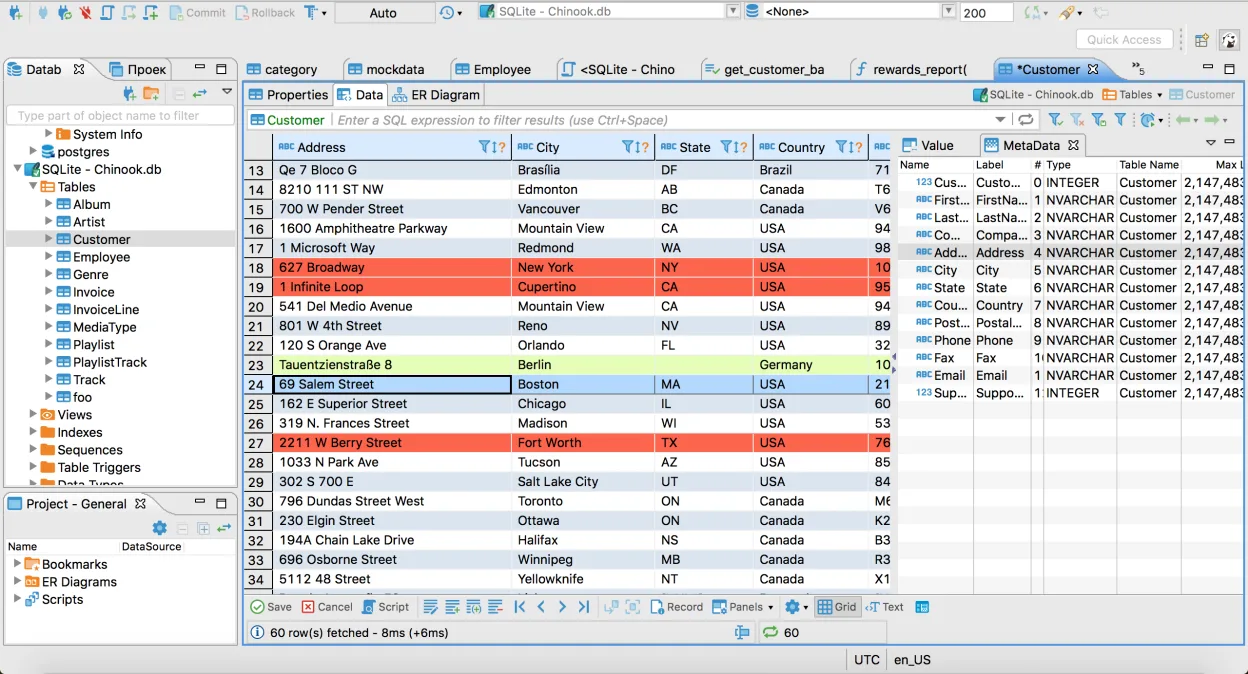
- Visual data grid for viewing and editing table contents
- ER diagram generation for database schema visualization
- Data import and export tools supporting CSV, XML, and JSON
- Built-in database metadata browser for tables, views, and procedures
- Support for multiple database connections in a single workspace
- Plugin architecture for extending functionality with additional drivers
How to install DBeaver Community on Linux
flatpak install flathub io.dbeaver.DBeaverCommunitysudo pacman -S dbeaverFrequently asked questions
Can DBeaver create dashboards like Power BI?
No, DBeaver does not support interactive dashboards or visual reports. It is designed for database interaction, not data presentation. Use tools like Metabase, Superset, or Redash alongside DBeaver for dashboards.
Is DBeaver suitable for business analysts?
Not as a full Power BI alternative. Analysts needing to build and share visual reports should look elsewhere. DBeaver is better suited for technical users comfortable with SQL and database structures.
Can I automate data refreshes in DBeaver like in Power BI?
No, DBeaver has no built-in scheduling. Use external tools like cron jobs, Python scripts, or task schedulers to automate queries and data exports.