
 pgAdmin 4Linux
vs
Microsoft SQL Server Management StudioWindows
pgAdmin 4 as a Linux alternative to Microsoft SQL Server Management Studio
Updated
Our verdict
pgAdmin 4 can replace SSMS for users who work with PostgreSQL instead of SQL Server. It offers a web‑based GUI, query editor, ERD tool, backup/restore, monitoring, and fine‑grained permissions, all of which cover most day‑to‑day tasks in SSMS. However, it is not a drop‑in replacement for those who need to manage Microsoft SQL Server databases or use T‑SQL‑specific features. For PostgreSQL developers and DBAs, pgAdmin 4 is a solid choice.
- License
- PostgreSQL
- Price
- Free
- Latest version
- 9.19 (October 29, 2026)
- Rating
- —
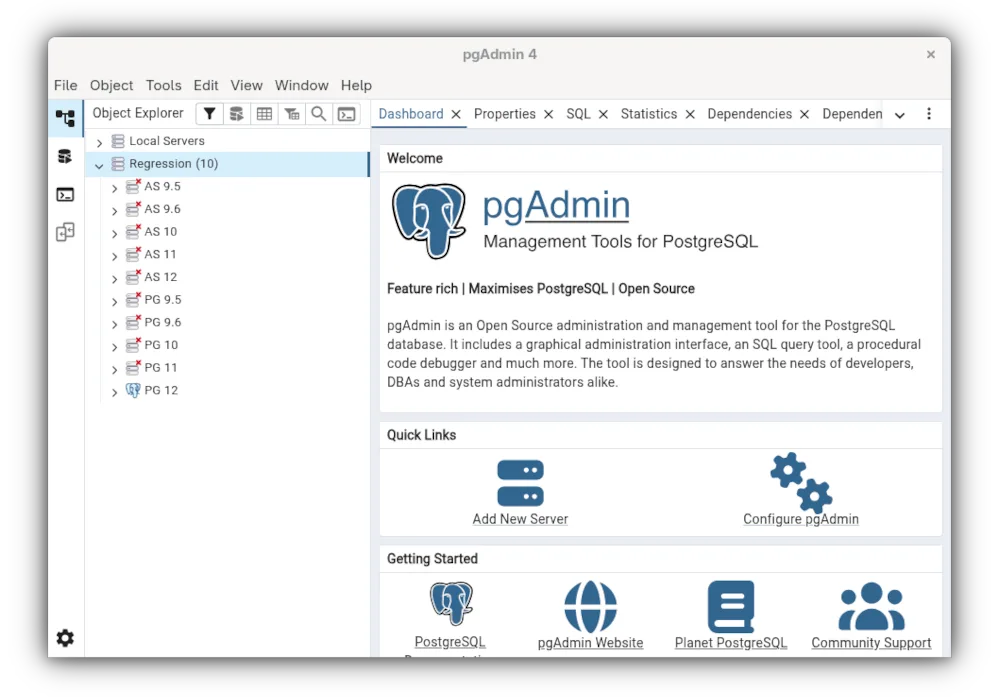
What works the same
- GUI‑based database management
- SQL query editor with syntax highlighting
- Object browser for tables, views, procedures
- Data import/export tools
- Performance monitoring dashboards
What is different
- Designed for PostgreSQL, not Microsoft SQL Server
- Lacks T‑SQL debugging and execution plans specific to SQL Server
- No native support for SQL Server Agent jobs
- Does not manage SQL Server security principals like logins and roles
- No integration with Windows authentication for SQL Server
Opening your Microsoft SQL Server Management Studio files
SSMS uses .mdf/.ldf database files and .bak backup files that are specific to SQL Server. pgAdmin 4 cannot open these files directly; you would need to restore the database in a SQL Server instance first or use third‑party tools to convert the data to PostgreSQL format. Exporting data from SSMS to CSV or SQL scripts can be imported into pgAdmin 4, but direct file compatibility is not available.
Switching from Microsoft SQL Server Management Studio to pgAdmin 4, step by step
- Export the SQL Server database to a SQL script or CSV files using SSMS export wizard.
- If needed, use a data migration tool (e.g., pg_dump, dbForge Data Compare) to convert schema and data to PostgreSQL syntax.
- Create a new PostgreSQL database via pgAdmin 4 and import the SQL script or CSV files.
- Verify table structures, indexes, and constraints match the original design.
- Adjust any T‑SQL specific code to PostgreSQL syntax (e.g., variable declaration, error handling).
- Test application connectivity against the new PostgreSQL database.
Key features of pgAdmin 4
- Web‑based interface accessible from any browser
- Advanced query editor with syntax highlighting and code completion
- ERD tool for schema design
- Auto‑vacuum, backup, and restore utilities
- Monitoring dashboard for performance metrics
- Fine‑grained user and permission management
How to install pgAdmin 4 on Linux
flatpak install flathub org.pgadmin.pgadmin4sudo dnf install pgadmin4sudo zypper install pgadmin4Frequently asked questions
Can I run pgAdmin 4 on Windows?
Yes, pgAdmin 4 is cross‑platform and can run on Windows, macOS, and Linux. It runs as a web application in a browser, but you can install a local server package for easier use.
Does pgAdmin 4 support remote PostgreSQL servers?
Yes, you can add any remote PostgreSQL instance by specifying its host, port, and credentials. The web interface works over HTTPS for secure remote access.
Is pgAdmin 4 free?
pgAdmin 4 is released under the PostgreSQL license, which is a permissive open‑source license. There is no cost to download, install, or use it.
