
Windows · Programming
Best Linux alternatives to Microsoft SQL Server Management Studio
SSMS is a Windows GUI for managing SQL Server databases.
Updated
Quick answer
The best Linux alternative to Microsoft SQL Server Management Studio is DBeaver Community. Other strong options: pgAdmin 4.
2 Linux alternatives to Microsoft SQL Server Management Studio
-
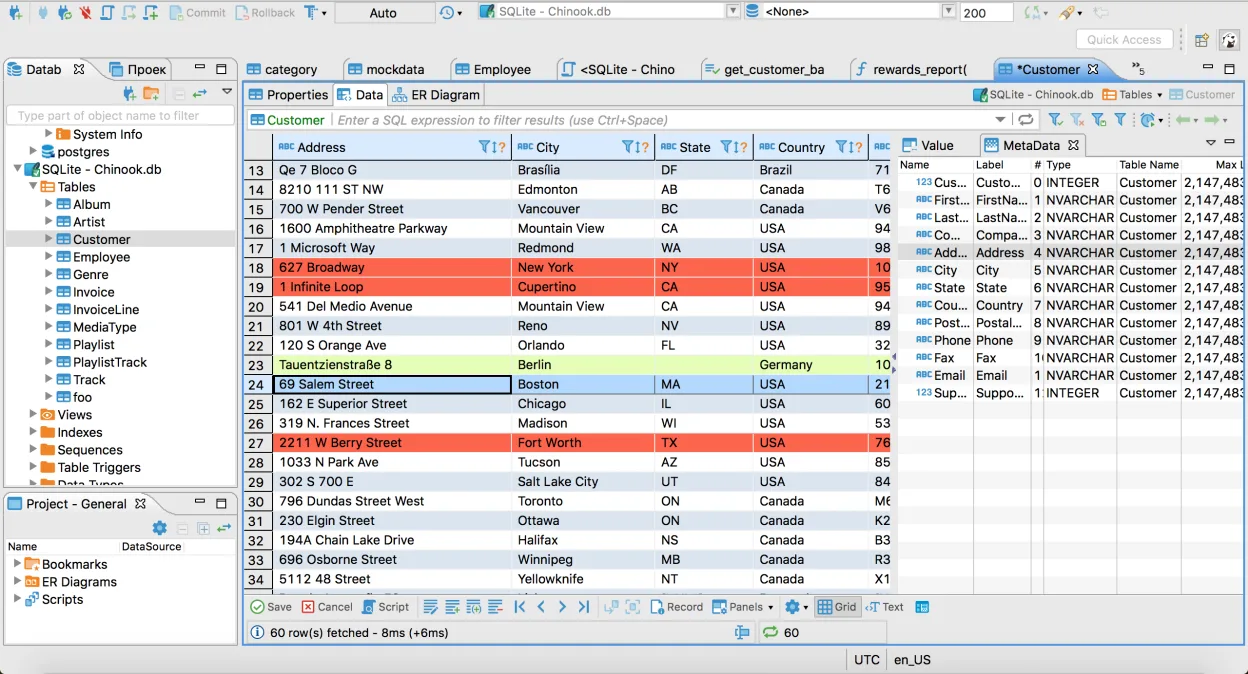
Free, multi-platform database tool for developers and admins supporting MySQL, PostgreSQL, SQL Server, and many others.
DBeaver Community is a solid replacement for Microsoft SQL Server Management Studio for developers and DBAs who need a cross‑platform tool. It supports SQL Server connections, T‑SQL editing, table design, and data import/export. It also offers multi‑database connectivity and an ER diagram…
Feature parity80% -
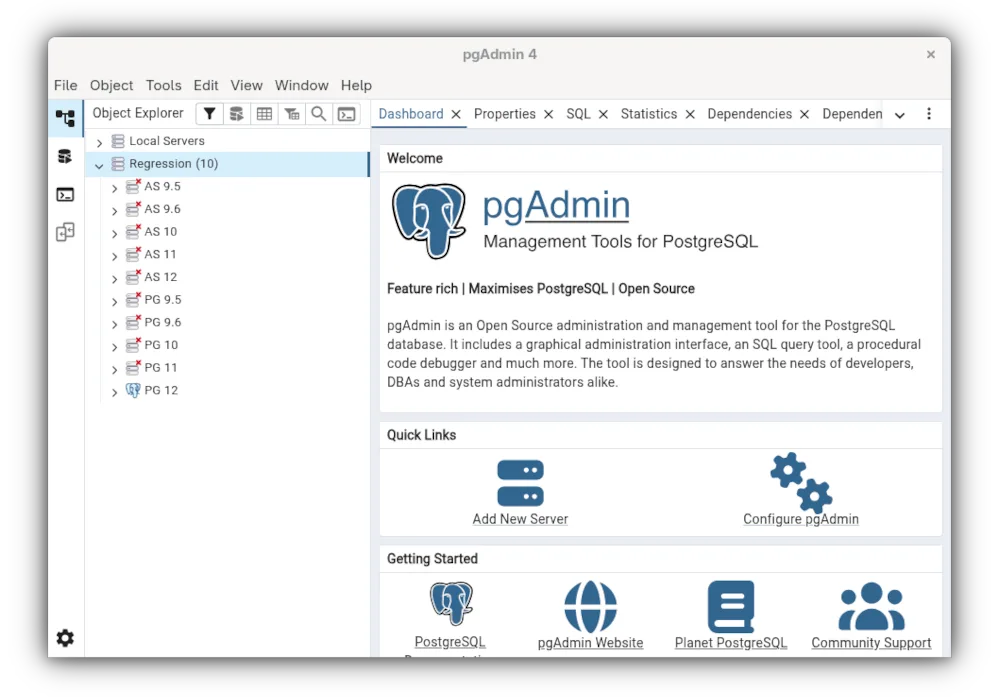
pgAdmin 4 is a web‑based administration and development platform for PostgreSQL.
pgAdmin 4 can replace SSMS for users who work with PostgreSQL instead of SQL Server. It offers a web‑based GUI, query editor, ERD tool, backup/restore, monitoring, and fine‑grained permissions, all of which cover most day‑to‑day tasks in SSMS. However, it is not a drop‑in replacement for those who…
Feature parity75%


What is Microsoft SQL Server Management Studio?
Microsoft SQL Server Management Studio (SSMS) is a full‑featured IDE that lets database administrators and developers create, edit, and run T‑SQL scripts, design database objects, and monitor server performance. It is bundled with SQL Server and is free to download, though it requires a Windows operating system and a licensed SQL Server instance. Users seek Linux alternatives when they want to work on Linux servers or prefer open‑source tools that run natively on Linux.
What a replacement for Microsoft SQL Server Management Studio must do
- Connect to SQL Server (MSSQL)
- Run and debug T‑SQL scripts
- Design tables, views, stored procedures
- View and modify database objects graphically
- Monitor server activity and performance
- Export and import data
- Support for multiple server connections
Can you run Microsoft SQL Server Management Studio on Linux?
SSMS has no native Linux build. It can be run under Wine with limited success; the UI may flicker and some features (e.g., debugging) do not work reliably. There is no official web version. Users who need a Linux tool usually install one of the listed open‑source alternatives instead of attempting to run SSMS via compatibility layers.
Which alternative should you choose?
For users who need a lightweight editor and occasional connections to SQL Server, DBeaver Community is a good fit. Those who want a dedicated SQL Server tool with advanced debugging and profiling should use pgAdmin 4 if they are also working with PostgreSQL, or MySQL Workbench for MySQL/MariaDB workloads. DB Browser for SQLite is only suitable for SQLite databases and not for SQL Server.
Moving your Microsoft SQL Server Management Studio files and habits
Exporting schemas and data from SSMS is typically done with scripts or the Generate Scripts wizard, producing standard T‑SQL files that can be run on other engines. Data can also be exported to CSV or SQL files. Importing into Linux tools usually involves running the same scripts or using the tools’ import wizards; compatibility depends on the target database engine’s support for T‑SQL features.
Side-by-side comparison
| App | License | Flatpak | Latest version | Feature parity | Rating |
|---|---|---|---|---|---|
| DBeaver Community | Apache-2.0 | ✓ | 26.2.3 | 80% | — |
| pgAdmin 4 | PostgreSQL | ✓ | 9.19 | 75% | — |
Microsoft SQL Server Management Studio: frequently asked questions
Is SSMS available for Linux?
No, SSMS is Windows‑only; it can only be run on Linux via Wine with limited functionality.
Can I use SSMS to manage PostgreSQL?
SSMS is designed for Microsoft SQL Server; it does not support PostgreSQL or other engines.
What is the cost of SSMS?
SSMS is free to download and use, but it requires a licensed SQL Server instance.
Can I run SSMS in a virtual machine?
Yes, running a Windows VM with SSMS installed works reliably on Linux hosts.
How important is Microsoft SQL Server Management Studio to you?
Know a better alternative? Suggest an alternative