
 PidginLinux
vs
 Quiet Internet Pager (QIP)Windows
Pidgin as a Linux alternative to Quiet Internet Pager (QIP)
Updated
Our verdict
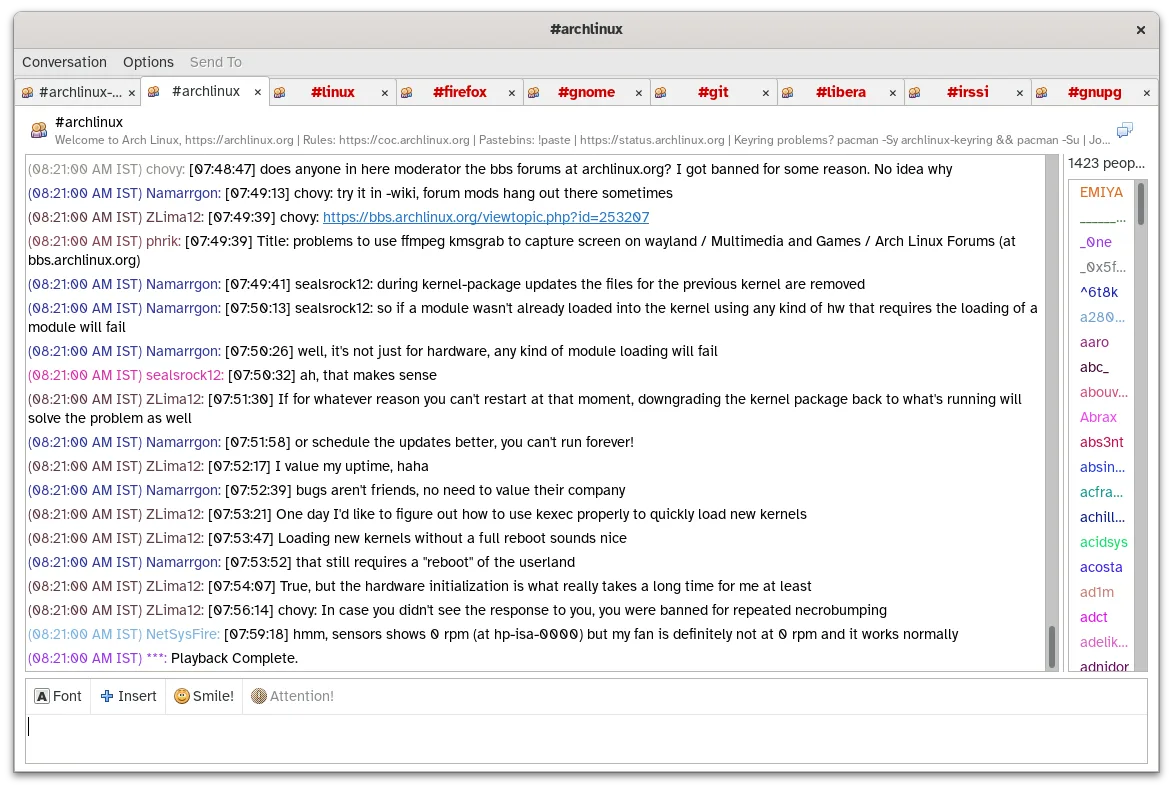
Pidgin is a solid replacement for QIP if you need multi-protocol support on Linux. It handles ICQ, XMPP, and IRC simultaneously, covering the core needs of typical QIP users. The interface is functional but dated compared to modern messengers. It lacks some of the polished, localized UI tweaks QIP offered for Russian-speaking users, but it provides robust logging, file transfer, and plugin support. For users who primarily need reliable ICQ and multi-protocol chat without proprietary locks, Pidgin works well. It is not a drop-in clone, but it fulfills the same core job effectively for technical users comfortable with configuration.
- License
- GPL-2.0
- Price
- Free
- Latest version
- 2.14.14 (January 23, 2025)
- Rating
- —
What works the same
- Supports multiple chat protocols including ICQ, XMPP, and IRC simultaneously
- Allows file transfers and emoticon usage across supported networks
- Provides local logging of chat histories for later review
- Features a customizable interface with themes and buddy list grouping
What is different
- Pidgin is open-source (GPL-2.0) while QIP was closed-source freeware
- Pidgin uses a plugin system for extensions like OTR, whereas QIP had built-in features
- Pidgin's UI is more utilitarian and less heavily localized for Russian aesthetics than QIP
- Pidgin supports a wider range of obsolete and modern protocols via libpurple
Opening your Quiet Internet Pager (QIP) files
There is no direct import tool for QIP contact lists or chat logs into Pidgin. You will likely need to manually export contacts from QIP to a CSV or plain text file and then import them into Pidgin, if supported by a plugin, or add them manually. Chat logs from QIP are stored in a proprietary format and cannot be directly opened in Pidgin; you would need to convert them to HTML or text if you wish to archive them alongside Pidgin logs.
Switching from Quiet Internet Pager (QIP) to Pidgin, step by step
- Install Pidgin via your distribution's package manager or Flatpak
- Add your ICQ account and other desired protocols in the account manager
- Export your QIP contact list to a text or CSV file
- Import or manually re-add contacts into Pidgin's buddy list
- Configure logging settings to save chats to local files
- Install any necessary plugins for specific features like OTR
Key features of Pidgin
- Supports over 30 chat protocols via libpurple
- Simultaneous login to multiple accounts
- Plugin system for extensions (e.g., OTR encryption, spell‑check)
- Buddy grouping and status messages
- File transfer for supported protocols
- Customizable themes and emoticons
- Logging of chats to local files
- Portable version via Flatpak
How to install Pidgin on Linux
flatpak install flathub im.pidgin.Pidginsudo apt install pidginsudo apt install pidginsudo dnf install pidginsudo zypper install pidginFrequently asked questions
Does Pidgin support the ICQ protocol natively?
Yes, ICQ is one of the core protocols supported by libpurple, the library Pidgin uses. You can log in to ICQ accounts directly without additional plugins.
Can I log into multiple networks at the same time?
Yes, Pidgin is designed for simultaneous logins. You can be in an IRC channel and chatting on XMPP or ICQ in the same window.
Is Pidgin actively maintained?
Yes, the latest release is 2.14.14, released in January 2025. It is packaged in major distributions like Debian, Fedora, and Ubuntu.
3 other alternatives to Quiet Internet Pager (QIP)
 PsiPsi is a lightweight, standards‑compliant XMPP/Jabber instant messaging client for Linux.Open sourceFreePsi vs Quiet Internet Pager (QIP)
 KopeteKopete is a discontinued multi-protocol instant messaging client designed for the KDE desktop environment.Open sourceFreeDiscontinuedKopete vs Quiet Internet Pager (QIP)
 EmpathyEmpathy was GNOME’s default IM and VoIP client supporting multiple protocols.Open sourceFreeDiscontinuedEmpathy vs Quiet Internet Pager (QIP)