
 digiKamLinux
vs
Lightroom MobileWindows
digiKam als Linux-Alternative zu Lightroom Mobile
Aktualisiert am
Unser Fazit
digiKam can replace Lightroom Mobile for users who need a desktop‑centric workflow and prefer local storage over cloud syncing. It handles RAW import, non‑destructive editing, tagging, and batch export, but it lacks built‑in cloud sync and the mobile‑friendly UI of Lightroom Mobile. It is best suited for photographers who already use a Linux desktop and want a powerful cataloging tool.
- Lizenz
- GPL-2.0+
- Preis
- Kostenlos
- Aktuelle Version
- 9.1.0 (7. Juni 2026)
- Bewertung
- —
Was gleich funktioniert
- Both support RAW import and non‑destructive editing
- Both allow metadata tagging and rating
- Both offer batch export of edited images
- Both provide a catalog of photos organized in albums
Was anders ist
- digiKam is a desktop application, Lightroom Mobile is mobile‑first
- digiKam has no native cloud sync, Lightroom Mobile syncs via Adobe Cloud
- digiKam’s UI is KDE‑centric, Lightroom Mobile has a touch‑optimized interface
- digiKam does not include Lightroom Mobile’s preset library out of the box
- digiKam lacks the same level of cross‑platform mobile sync
Ihre Lightroom Mobile-Dateien öffnen
digiKam can open RAW files that Lightroom Mobile edits, but it cannot read Lightroom Mobile’s proprietary .lrproj or .xmp preset files directly. Exporting from digiKam to common formats (JPEG, TIFF) works, but migrating edits back to Lightroom Mobile would require re‑applying adjustments manually.
Von Lightroom Mobile zu digiKam wechseln – Schritt für Schritt
- 1. Export edited images from Lightroom Mobile as JPEG or TIFF.
- 2. Import those files into digiKam via the import wizard.
- 3. Reapply any missing metadata tags or ratings in digiKam.
- 4. Use digiKam’s preset or batch export to create a new library if needed.
- 5. (Optional) If you need to keep Lightroom Mobile edits, export the original RAW files and import them into digiKam for further work.
Wichtige Funktionen von digiKam
- Direkter Import von Kameras, SD-Karten und USB-Laufwerken mit konfigurierbaren Regeln
- Fortgeschrittenes Tagging, Bewertung und Label-System für komplexe Bibliotheksorganisation
- Leistungsstarker Such-Engine, die EXIF, IPTC und XMP-Metadatakriterien unterstützt
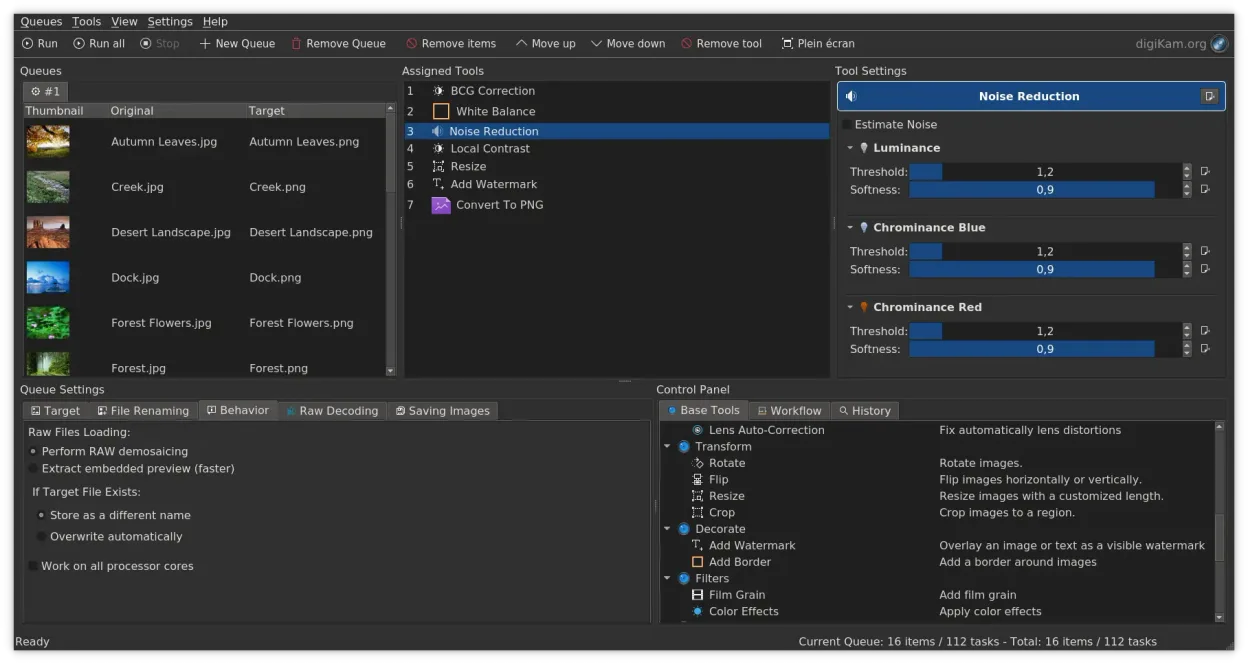
- Nicht-destruktive Bearbeitung mit Farbkorrekturen, Zuschneiden und Schärfen
- Native RAW-Unterstützung über LibRaw zum Dekodieren und Voransicht
- Videokatalogisierung und Metadatenerfassung mit FFmpeg-Backends
- Albumorganisation mit Drag-and-Drop-Oberfläche
- Plattformübergreifende Verfügbarkeit für Linux, Windows und macOS
digiKam unter Linux installieren
flatpak install flathub org.kde.digikamsudo apt install digikamsudo apt install digikamsudo dnf install digikamsudo pacman -S digikamsudo zypper install digikamHäufige Fragen
Does digiKam support Lightroom Mobile presets?
No, digiKam does not natively import Lightroom Mobile presets. You would need to recreate the adjustments manually or use a generic preset format if available.
Can I sync digiKam libraries with Lightroom Mobile?
There is no direct sync. You would need to export images from digiKam and import them into Lightroom Mobile, or use a shared cloud folder and manually manage edits.
Is digiKam free?
Yes, digiKam is released under GPL‑2.0+ and is available for free on Linux, Windows, and macOS.
4 weitere Alternativen zu Lightroom Mobile
 darktabledarktable ist ein kostenloser, quelloffener Bildbearbeitungsprogrammier, der Rohdateien verwaltet und einen…Open SourceKostenlosFlatpakdarktable vs. Lightroom Mobile
 RawTherapeeRawTherapee ist ein quelloffenes, plattformübergreifendes Programm zur Entwicklung von Raw-Fotos.Open SourceKostenlosFlatpakRawTherapee vs. Lightroom Mobile
 GIMPGIMP ist ein kostenloser, quelloffener Rastergrafik‑Editor für Fotobearbeitung, digitale Malerei und…Open SourceKostenlosFlatpakGIMP vs. Lightroom Mobile
 ShotwellShotwell ist ein GNOME-Fotoverwaltungstool zum Importieren, Organisieren und leichten Bearbeiten von Bildern.Open SourceKostenlosFlatpakShotwell vs. Lightroom Mobile