
 digiKamLinux
vs
Adobe Lightroom CCWindows
digiKam als Linux-Alternative zu Adobe Lightroom CC
Aktualisiert am
Unser Fazit
digiKam can serve as a practical Lightroom replacement for photographers who need a free, Linux‑native tool for cataloguing and non‑destructive RAW editing. It shines for users comfortable with KDE/Qt environments and who value flexible tagging, powerful search, and batch processing. It lacks some of Lightroom’s cloud sync, built‑in mobile ecosystem, and the depth of Adobe’s preset marketplace, so it’s best for hobbyists, indie shooters, or professionals who can live without those services.
- Lizenz
- GPL-2.0+
- Preis
- Kostenlos
- Aktuelle Version
- 9.1.0 (7. Juni 2026)
- Bewertung
- —
Was gleich funktioniert
- Both store images in a central catalog and support keyword/tagging, rating, and labeling.
- Non‑destructive RAW editing with color, exposure, and cropping tools.
- Batch export and processing capabilities.
- Ability to create and apply user‑defined presets or profiles.
Was anders ist
- Lightroom offers seamless cloud sync and mobile editing; digiKam is desktop‑only.
- Lightroom’s UI is geared toward a streamlined workflow; digiKam’s KDE interface can feel more complex.
- Lightroom includes a large marketplace of commercial presets and profiles; digiKam relies on community‑made filters.
- Lightroom can directly edit Adobe-specific side‑car files (XMP) tied to its catalog; digiKam’s handling of those files is limited.
Ihre Adobe Lightroom CC-Dateien öffnen
digiKam can open standard RAW files that Lightroom supports, but it cannot read Lightroom-specific catalog files (.lrcat) or proprietary preset files (.lrtemplate). Exported JPEG/TIFF from Lightroom can be re‑imported without issue. If you need to preserve edits, you’ll have to export the edited images from Lightroom first.
Von Adobe Lightroom CC zu digiKam wechseln – Schritt für Schritt
- Export your Lightroom catalog as a set of JPEG/TIFF files with embedded XMP side‑car data.
- Copy the original RAW files and the exported images to your Linux machine.
- Install digiKam (e.g., via Flathub or your distro’s package manager).
- Use digiKam’s import wizard to bring in the RAW files, applying the XMP side‑cars if present.
- Re‑create tags, ratings, and albums using digiKam’s tagging tools.
- Save your new digiKam albums as projects for future reference.
Wichtige Funktionen von digiKam
- Direkter Import von Kameras, SD-Karten und USB-Laufwerken mit konfigurierbaren Regeln
- Fortgeschrittenes Tagging, Bewertung und Label-System für komplexe Bibliotheksorganisation
- Leistungsstarker Such-Engine, die EXIF, IPTC und XMP-Metadatakriterien unterstützt
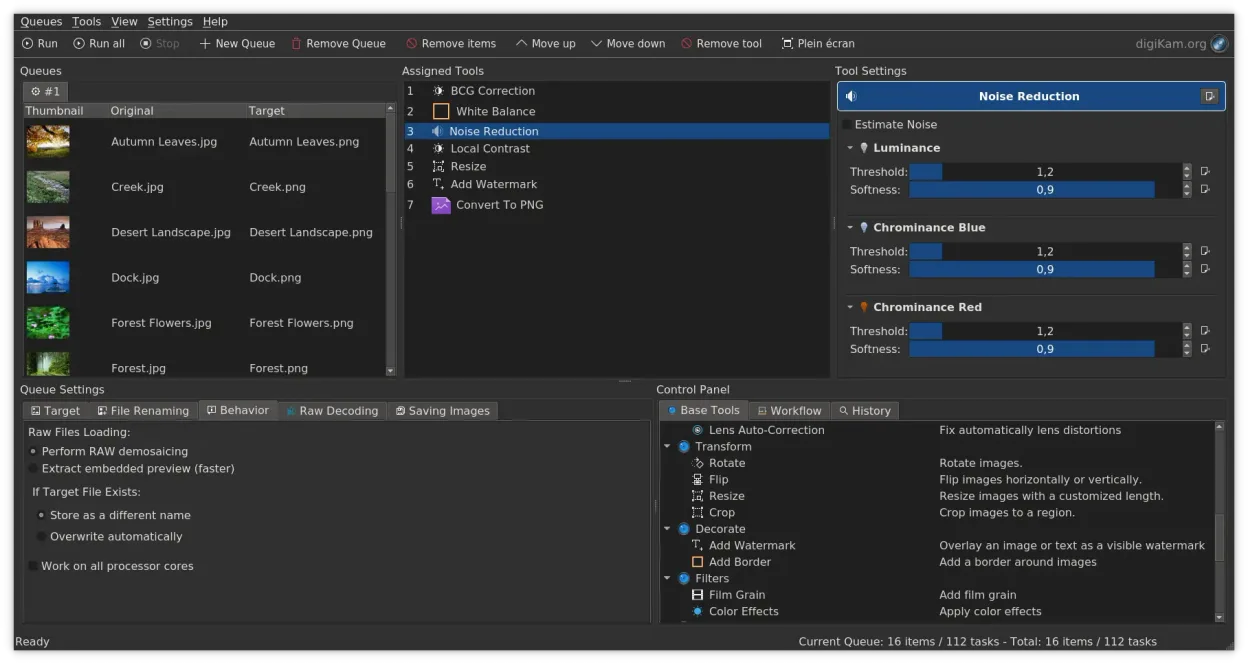
- Nicht-destruktive Bearbeitung mit Farbkorrekturen, Zuschneiden und Schärfen
- Native RAW-Unterstützung über LibRaw zum Dekodieren und Voransicht
- Videokatalogisierung und Metadatenerfassung mit FFmpeg-Backends
- Albumorganisation mit Drag-and-Drop-Oberfläche
- Plattformübergreifende Verfügbarkeit für Linux, Windows und macOS
digiKam unter Linux installieren
flatpak install flathub org.kde.digikamsudo apt install digikamsudo apt install digikamsudo dnf install digikamsudo pacman -S digikamsudo zypper install digikamHäufige Fragen
Can I sync my digiKam library across multiple computers?
digiKam does not provide built‑in cloud sync; you need to use a third‑party file‑sync service (e.g., Nextcloud, Syncthing) to share the database and image folders.
Does digiKam support video editing like Lightroom?
It can catalog video files and extract metadata, but it lacks advanced video editing features; you’ll need a separate video editor.
Are Lightroom mobile apps compatible with digiKam?
No. digiKam has no mobile companion; you would have to transfer images manually or use a generic file‑sync solution.
3 weitere Alternativen zu Adobe Lightroom CC
 darktabledarktable ist ein kostenloser, quelloffener Bildbearbeitungsprogrammier, der Rohdateien verwaltet und einen…Open SourceKostenlosFlatpakdarktable vs. Adobe Lightroom CC
 RawTherapeeRawTherapee ist ein quelloffenes, plattformübergreifendes Programm zur Entwicklung von Raw-Fotos.Open SourceKostenlosFlatpakRawTherapee vs. Adobe Lightroom CC
 ShotwellShotwell ist ein GNOME-Fotoverwaltungstool zum Importieren, Organisieren und leichten Bearbeiten von Bildern.Open SourceKostenlosFlatpakShotwell vs. Adobe Lightroom CC