
 Rocket.ChatLinux
vs
Microsoft Teams (classic version)Windows
Rocket.Chat como alternativa Linux a Microsoft Teams (classic version)
Actualizado el
Nuestra opinión
Rocket.Chat is a strong, self-hosted alternative for teams wanting to leave Microsoft's ecosystem. It covers persistent channels, video calls, and file sharing well. However, it lacks native, deep integration with Microsoft 365 calendar and email, which is a core part of Teams. If your workflow relies heavily on Outlook integration or Microsoft-specific collaborative editing, you will face friction. It is best for organizations prioritizing data sovereignty and open-source control over seamless Microsoft 365 interoperability.
- Licencia
- MIT
- Precio
- Gratis
- Última versión
- 4.19.3 (12 de noviembre de 2026)
- Valoración
- —
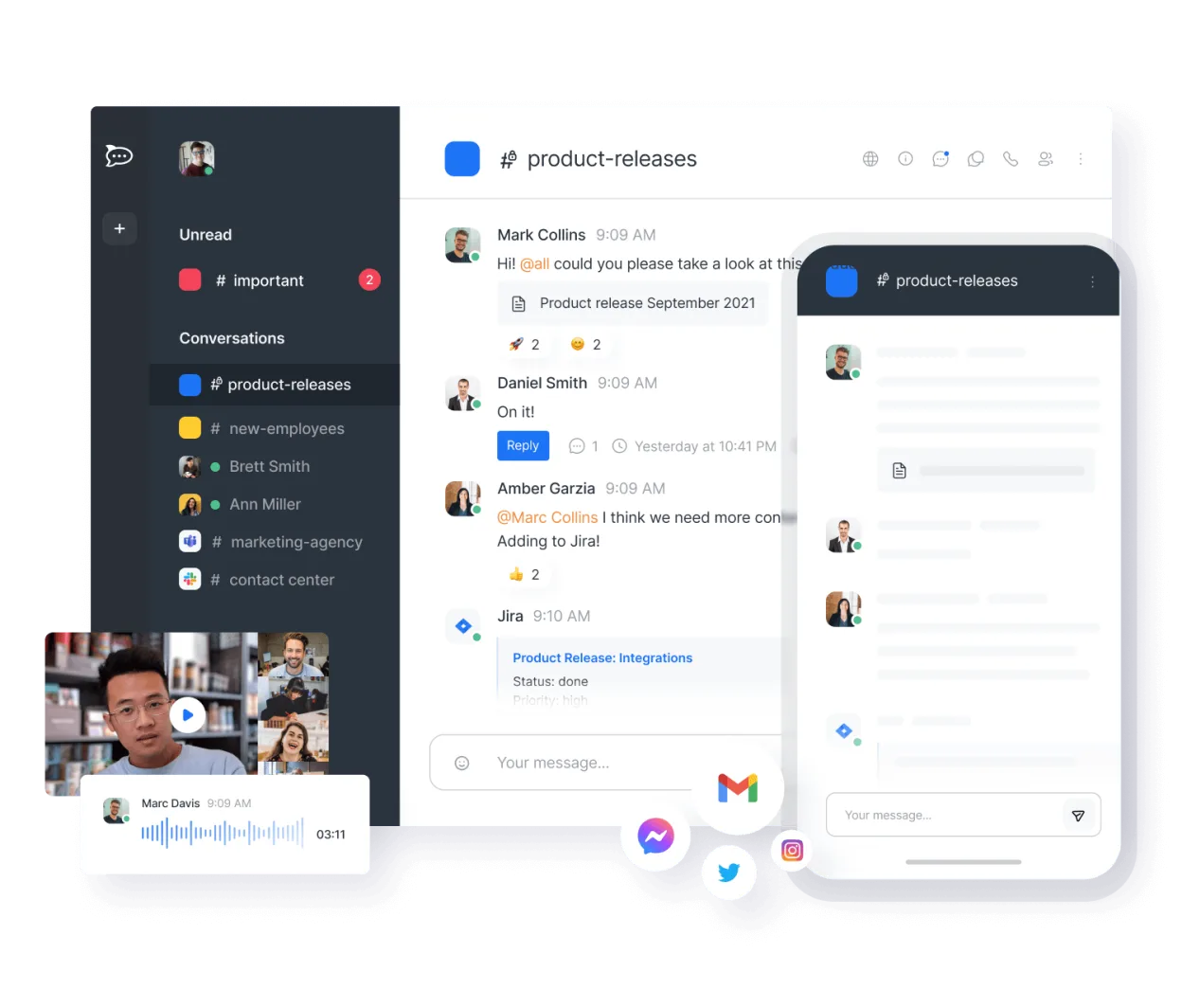
Lo que funciona igual
- Persistent team chat channels with topic support
- Built-in video and audio conferencing with screen sharing
- File sharing and attachment capabilities
- Cross-platform clients for Linux, Windows, macOS, iOS, and Android
- Open-source and self-hostable option
Lo que cambia
- No native, deep integration with Microsoft 365 Calendar and Outlook email
- Collaborative document editing is less tightly integrated than Microsoft Office 365
- Requires self-hosting or using Rocket.Chat's paid cloud for full feature parity
- Bot and integration ecosystem differs significantly from Microsoft's Power Platform
- User management and directory integration (like Azure AD) require additional configuration
Abrir tus archivos de Microsoft Teams (classic version)
Rocket.Chat handles standard file formats (PDF, images, Office docs) as attachments. It does not natively open or edit Microsoft Teams-specific file formats or proprietary Teams meeting recordings. If you share Office documents, you will need a separate editor like LibreOffice or OnlyOffice to open and edit them, as Rocket.Chat itself is a communication platform, not a document suite.
Pasar de Microsoft Teams (classic version) a Rocket.Chat, paso a paso
- Install Rocket.Chat server and configure your domain and SMTP settings
- Create user accounts and import your team structure into channels
- Set up video conferencing infrastructure (e.g., Jitsi integration) for reliable calls
- Configure integrations for calendar and email using third-party bots or APIs
- Test file sharing and permissions with a small group before full rollout
- Train users on new features and differences from Microsoft Teams
Funciones clave de Rocket.Chat
- Usuarios y canales ilimitados por defecto
- Conferencias de video y audio
- Compartir archivos y edición de documentos en vivo
- API extensa e integraciones de bots
- Cifrado de extremo a extremo para canales privados
- Opciones autoalojadas o alojadas en la nube
- Aplicaciones móviles para iOS y Android
- Temas y diseños personalizables
Cómo instalar Rocket.Chat en Linux
flatpak install flathub chat.rocket.RocketChatPreguntas frecuentes
Can Rocket.Chat replace Microsoft Teams for a company already using Microsoft 365?
It can handle chat and video, but you will lose seamless calendar and email integration. You would need to use Outlook separately and rely on bots or manual workflows to connect the two, which adds complexity.
Is Rocket.Chat free to use?
The software is open-source and free to self-host with unlimited users. Rocket.Chat offers a paid cloud service, but self-hosting is the common path for avoiding per-user licensing fees.
Does Rocket.Chat support end-to-end encryption?
Yes, it offers end-to-end encryption for private channels and direct messages, which is a feature not always enabled by default in Microsoft Teams for all organizations.
Otras 5 alternativas a Microsoft Teams (classic version)
 SlackSlack es una aplicación propietaria de comunicación para equipos en Linux que centraliza conversaciones…FlatpakSlack vs Microsoft Teams (classic version)
 MattermostMattermost es una plataforma de colaboración de código abierto y autoalojada para equipos de desarrolladores…Código abiertoGratisFlatpakMattermost vs Microsoft Teams (classic version)
 DiscordUna aplicación de mensajería, voz y video multiplataforma para comunidades, juegos y encuentros casuales.FlatpakDiscord vs Microsoft Teams (classic version)
 ZulipZulip es una aplicación de chat de grupo de código abierto que utiliza conversaciones en hilos para gestionar…Código abiertoGratisFlatpakZulip vs Microsoft Teams (classic version)
 ElementUn cliente Matrix seguro y de código abierto para mensajería privada, chats grupales y videollamadas en todos…Código abiertoGratisFlatpakElement vs Microsoft Teams (classic version)