
Windows · Sound & Video
Best Linux alternatives to MediaMonkey
MediaMonkey is a Windows media manager for organizing, tagging, and playing large audio libraries.
Updated
Quick answer
The best Linux alternative to MediaMonkey is Rhythmbox. Other strong options: Clementine Music Player, Quod Libet.
3 Linux alternatives to MediaMonkey
-

Rhythmbox is GNOME's default music player, designed to manage and play local and streaming audio with plugin support.
Rhythmbox can replace MediaMonkey for users who mainly need to play, organize, and tag local audio libraries on Linux. It handles large collections, supports many formats, and syncs with Android devices. However, it lacks some advanced features like extensive playlist scripting, advanced backup, or…
Feature parity70% -

Clementine is a cross‑platform music player that plays local files, internet radio, and supports cloud libraries.
Clementine is a solid replacement for MediaMonkey if you primarily manage local music libraries, tag files, and play audio across formats. It handles large libraries well and offers solid metadata editing, smart playlists, and device sync for MTP and mass-storage players. However, it lacks some…
Feature parity80% -
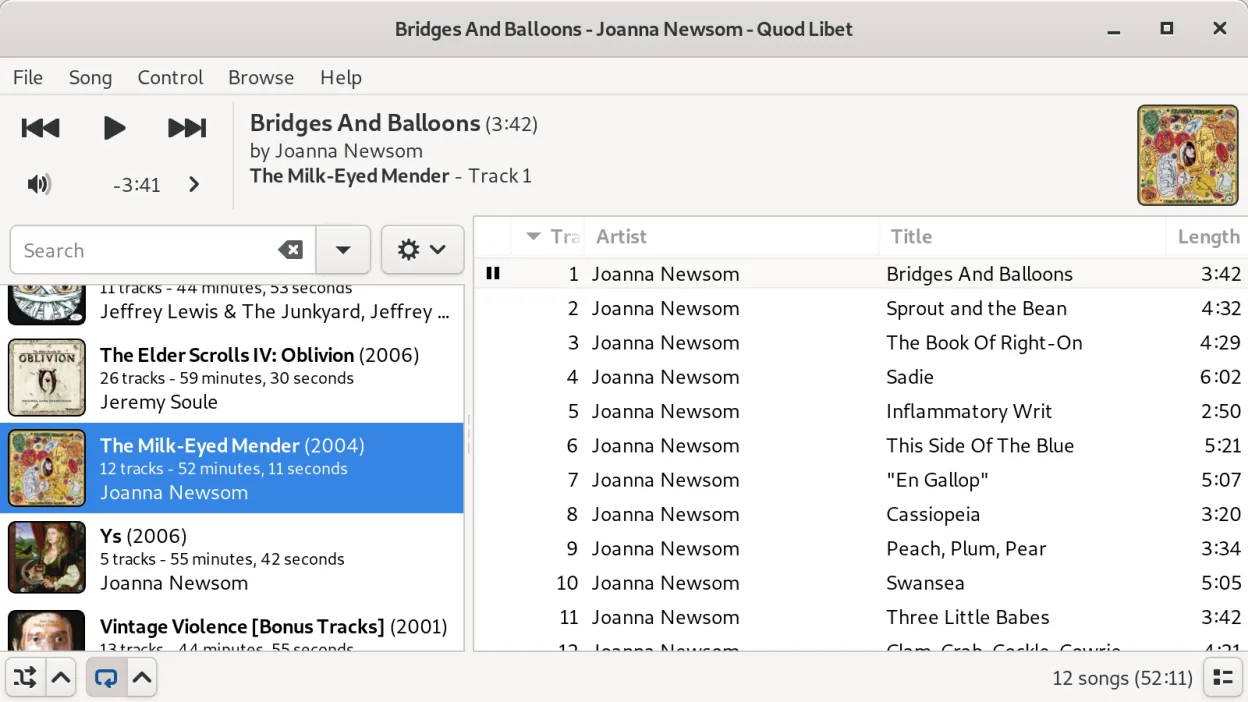
Quod Libet is an open‑source music manager and player for Linux with powerful tag editing and flexible library views.
Quod Libet can replace MediaMonkey for most users who need a Linux‑native solution. It handles large libraries, offers powerful tag editing, supports the same wide range of audio formats, and can sync to devices via standard protocols. The interface is more minimal than MediaMonkey’s but still…
Feature parity85%



What is MediaMonkey?
MediaMonkey is used by music collectors and podcast listeners to keep large libraries sorted, tag files, and stream to devices. It runs on Windows and Android, with a free version that includes basic playback and library tools, and a paid Pro version that adds advanced tagging, backup, and cloud sync features. Users turn to Linux alternatives when they want a native, open‑source solution that integrates with their desktop environment and avoids the need for Windows or paid licenses.
What a replacement for MediaMonkey must do
- Manage large audio libraries
- Tag and edit metadata
- Play audio files
- Synchronize with devices
- Support multiple audio formats
- Provide a clean, user‑friendly interface
Can you run MediaMonkey on Linux?
There is no native Linux build of MediaMonkey. Users can run the Windows version through Wine, but stability varies and some features (e.g., device sync) may not work reliably. No official web or Proton/Bottles version exists.
Which alternative should you choose?
Rhythmbox is a good fit for GNOME users who need basic library management. Clementine offers a cross‑desktop, feature‑rich player with playlist support. DeadBeef is lightweight and highly configurable. Audacious is ideal for users who prefer a classic, minimal interface. Quod Libet excels for power users who need advanced tagging and filtering.
Moving your MediaMonkey files and habits
Export your library as an XML or CSV file from MediaMonkey, then import it into the chosen Linux player. Most players can read standard audio tags (ID3, Vorbis, etc.) and will automatically recognize the file locations if the folder structure remains unchanged.
Side-by-side comparison
| App | License | Flatpak | Latest version | Feature parity | Rating |
|---|---|---|---|---|---|
| Rhythmbox | GPL-2.0+ and GFDL-1.3 | ✓ | 3.5.1 | 70% | — |
| Clementine Music Player | GPL-3.0+ | ✓ | 1.4.0rc2 | 80% | — |
| Quod Libet | GPL-2.0-or-later | ✓ | 4.7.1 | 85% | — |
MediaMonkey: frequently asked questions
Can I use MediaMonkey on Linux without Wine?
No, there is no native Linux version; you must use Wine or switch to a Linux alternative.
Will my tags survive the migration?
Yes, tags are stored in the audio files themselves; as long as you keep the files intact, tags will transfer.
Is there a free alternative that supports podcasts?
Clementine and Rhythmbox both support podcast feeds and can download episodes.
Do I need to purchase a license for MediaMonkey Pro on Linux?
MediaMonkey Pro is only available for Windows; on Linux you would need to use the free version or a different application.
How important is MediaMonkey to you?
Know a better alternative? Suggest an alternative