
 SlackLinux
vs
Microsoft Teams (classic desktop client)Windows
Slack as a Linux alternative to Microsoft Teams (classic desktop client)
Updated
Our verdict
Slack can serve as a practical replacement for Microsoft Teams classic on Linux for teams that prioritize chat, threaded discussions, and a wide range of third‑party integrations. It works well for organizations that don’t rely heavily on deep Office 365 integration, advanced meeting controls, or built‑in SharePoint storage. If your workflow is centered on quick messaging, file previews, and flexible notifications, Slack will feel familiar; however, teams that need tight coupling with Outlook calendars, native Teams meetings, or extensive Microsoft document co‑authoring may find it lacking.
- License
- LicenseRef-proprietary=https://slack.com…
- Price
- freemium
- Latest version
- 4.53.280 (November 4, 2026)
- Rating
- —
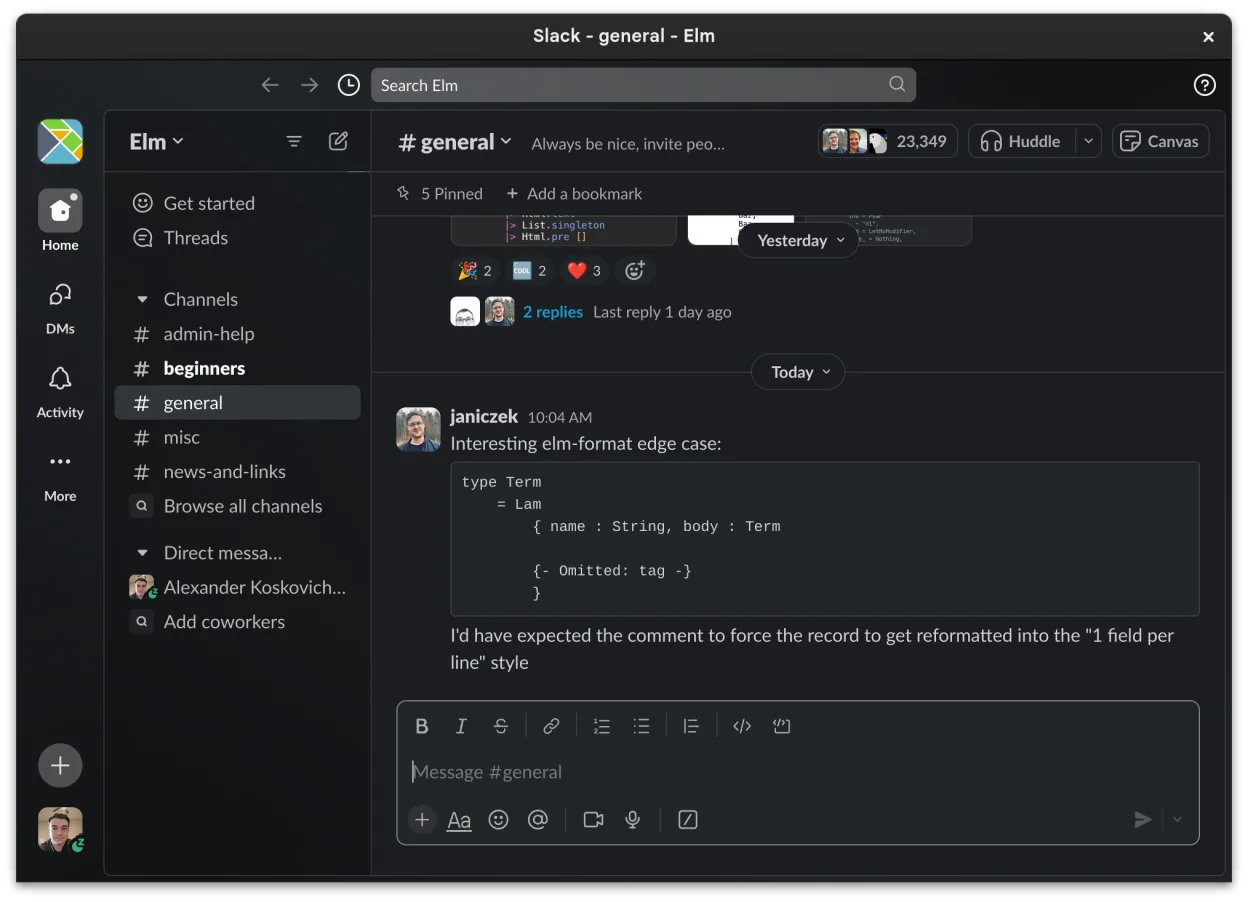
What works the same
- Channel‑based organization for topics
- Direct messaging with read receipts
- File sharing with preview support
- Presence/status indicators
- Cross‑device synchronization
What is different
- No built‑in integration with Office 365 calendar or Outlook email
- Video/voice meetings rely on Slack Calls, which lack the full Teams meeting feature set (e.g., lobby, breakout rooms)
- No native SharePoint or OneDrive storage; files are stored within Slack or external apps
- Limited admin and compliance controls compared with Teams
- Linux client is still in beta, so some desktop features may be missing or unstable
Opening your Microsoft Teams (classic desktop client) files
Slack can open most common document types (PDF, DOCX, XLSX, images) that are shared within a channel, but it does not provide the same deep integration with Microsoft Office files as Teams. Exporting a Teams‑specific file (e.g., a Teams meeting transcript or a SharePoint‑hosted document) directly from Slack is not supported; you would need to download the file from Teams first and then upload it to Slack manually.
Switching from Microsoft Teams (classic desktop client) to Slack, step by step
- Create a Slack workspace for your organization.
- Invite all existing Teams users to join the Slack workspace.
- Set up channels that mirror your Teams channels and assign appropriate members.
- Configure Slack Apps for any tools you currently use in Teams (e.g., Google Drive, GitHub).
- Export important files from Teams (via SharePoint or OneDrive) and upload them to the relevant Slack channels.
- Train users on Slack’s threading and notification settings to reduce noise.
Key features of Slack
- Channel-based organization for topics and projects
- Direct messaging with read receipts and reactions
- File sharing with preview support for common formats
- Integration with third-party tools via Slack Apps
- Threaded conversations to keep main channels uncluttered
- Cross-device sync for messages and notifications
- Customizable notification settings per channel or DM
- Beta Linux client with ongoing feature additions
How to install Slack on Linux
flatpak install flathub com.slack.SlackFrequently asked questions
Can Slack replace Teams meetings?
Slack offers voice and video calls, but it lacks many enterprise‑grade meeting features such as lobby control, live captions, and large‑scale webinars that Teams provides.
Will my Teams chat history transfer to Slack?
There is no automated migration of chat history; you would need to export Teams conversations manually and import them, which is rarely practical.
Is the Slack Linux client stable enough for daily use?
The client is in beta, so occasional glitches are expected, but most core messaging functions work reliably for everyday tasks.
4 other alternatives to Microsoft Teams (classic desktop client)
 MattermostMattermost is an open-source, self-hosted collaboration platform for developer teams, offering a secure…Open sourceFreeFlatpakMattermost vs Microsoft Teams (classic desktop client)
 Rocket.ChatOpen-source team communication platform for chat, video, and collaboration, often used to replace Slack or…Open sourceFreeFlatpakRocket.Chat vs Microsoft Teams (classic desktop client)
 ZulipZulip is an open-source group chat application that uses threaded conversations to manage high-volume team…Open sourceFreeFlatpakZulip vs Microsoft Teams (classic desktop client)
 ElementElement is an open‑source, matrix‑based chat and video‑conference client for Linux.Open sourceFreeFlatpakElement vs Microsoft Teams (classic desktop client)
All alternatives to Microsoft Teams (classic desktop client)