
 LogseqLinux
vs
Notion Desktop AppWindows
Logseq as a Linux alternative to Notion Desktop App
Updated
Our verdict
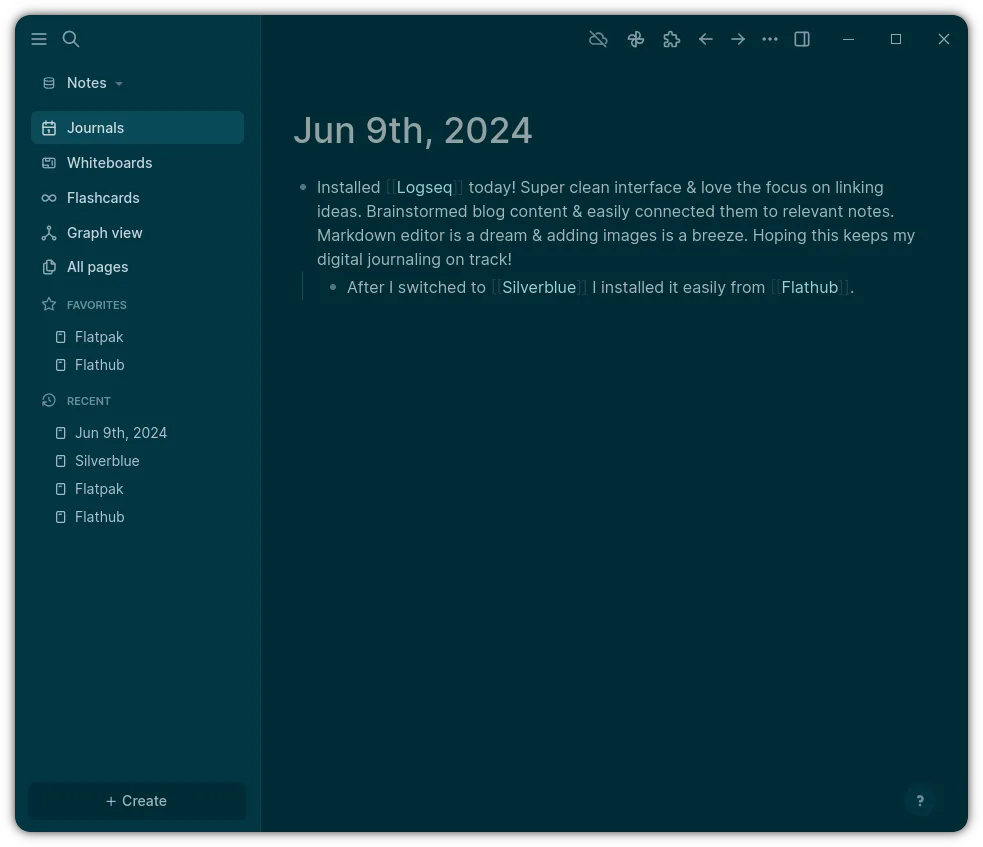
Logseq is a good replacement for Notion Desktop App if you prioritize privacy, local storage, and plain text, and are comfortable with a steeper learning curve. It handles note-taking, task management, and knowledge linking well, especially for individual use or technical teams using Git for collaboration. However, it lacks Notion’s polished database features, real-time multi-user editing, and rich web integration. If you rely heavily on shared workspaces, forms, or relational databases, Logseq will feel limited. It’s best for users who want a customizable, offline-first tool and don’t need flashy UIs or enterprise collaboration.
- License
- AGPL-3.0-or-later
- Price
- Free
- Latest version
- 0.10.15 (December 5, 2025)
- Rating
- —
What works the same
- Both support rich note-taking with formatting, checklists, and nested content
- Task and project management via to-do lists and daily notes
- Database-like organization using tags, pages, and queries
- Cross-device sync when combined with external tools (e.g., Git, cloud folders)
- Support for Markdown formatting and plain text storage
What is different
- Logseq lacks Notion’s real-time multi-user collaboration and shared workspaces
- No built-in web clipper; requires third-party tools or manual saving
- No native support for relational databases or rollups like Notion
- Logseq is keyboard-focused and text-first, with less visual polish
- Notion offers templates, forms, and integrations Logseq doesn’t have
Opening your Notion Desktop App files
Logseq cannot directly open Notion files. Notion exports to Markdown, CSV, PDF, and HTML, and Logseq can import Markdown files. You can export pages or databases from Notion and manually restructure them into Logseq’s format. However, complex database relations, linked databases, and inline comments may not transfer cleanly. Some manual cleanup and re-linking will be needed. There are community scripts to assist migration, but no official or fully automated tool.
Switching from Notion Desktop App to Logseq, step by step
- Export your Notion pages and databases as Markdown or HTML
- Organize exported content into a folder structure matching Logseq’s page hierarchy
- Move the files into a Logseq graph and rename them to match page links
- Use double-bracket links in Logseq to reconnect pages manually
- Recreate daily notes and tasks using Logseq’s built-in templates if needed
Key features of Logseq
- Local‑first storage in Markdown/Org files
- Graph view for visualizing connections
- Daily notes and agenda integration
- Keyboard‑centric navigation
- Collaboration via Git or shared folders
- Customizable themes and plugins
How to install Logseq on Linux
flatpak install flathub com.logseq.LogseqFrequently asked questions
Can I sync Logseq across devices like Notion?
Yes, but not natively. Use Git, Syncthing, or a cloud folder (e.g., Dropbox) to sync your Logseq graph folder. Git gives version control and collaboration, but requires basic command-line knowledge.
Does Logseq support real-time team collaboration?
No. Logseq supports collaboration via Git or shared folders, but not real-time editing. Multiple users must manage merge conflicts manually. It’s better suited for asynchronous or technical teams.
Can I use Logseq offline?
Yes. Logseq is local-first and works fully offline. All data is stored in plain text files on your machine, and sync happens only when you choose to push or pull changes.
3 other alternatives to Notion Desktop App
 JoplinJoplin is an open‑source, cross‑platform note‑taking and to‑do app that stores data in Markdown.Open sourceFreeFlatpakJoplin vs Notion Desktop App
 Standard NotesStandard Notes is a cross‑platform, end‑to‑end encrypted notes app that syncs securely across devices.Open sourceFreeFlatpakStandard Notes vs Notion Desktop App
 ObsidianObsidian is a markdown‑based knowledge‑base app that stores notes as plain‑text files in a local folder.FlatpakObsidian vs Notion Desktop App