
Windows · System Tools
Best Linux alternatives to NVIDIA Frame View
NVIDIA Frame View analyzes frame pacing, latency, and GPU performance in games, mainly for Windows users with NVIDIA GPUs.
Updated
Quick answer
The best Linux alternative to NVIDIA Frame View is MangoHud. Other strong options: GNOME System Monitor.
2 Linux alternatives to NVIDIA Frame View
-
MangoHud is a lightweight overlay that displays real‑time GPU, CPU, and FPS stats on Linux games.
MangoHud can serve as a practical replacement for NVIDIA Frame View for most Linux gamers who need real‑time GPU, CPU and FPS information with low overhead. It covers the basic overlay metrics and works with Vulkan, OpenGL and Proton games on NVIDIA hardware. However, it lacks the detailed…
Feature parity70% -
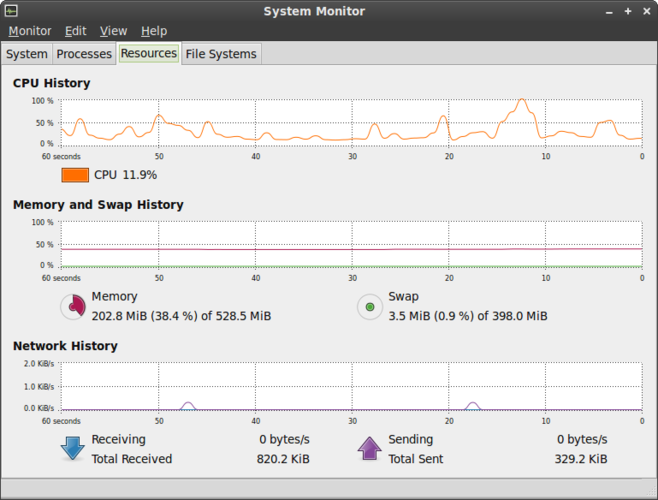
GNOME System Monitor is the standard Linux utility for viewing running processes, CPU, memory, and system resource usage.
GNOME System Monitor is not a direct replacement for NVIDIA Frame View. It provides general system resource monitoring but lacks the specialized GPU telemetry, frame pacing analysis, and low-overhead in-game overlay that Frame View offers. If you only need to check if your GPU is maxed out during a…
Feature parity20%

What is NVIDIA Frame View?
NVIDIA Frame View is a diagnostic tool designed for gamers, developers, and performance analysts who need to understand frame delivery and GPU behavior in real time. It helps identify stutters, micro-stutters, and rendering inefficiencies in supported games, especially those using NVIDIA drivers and hardware.
The tool is free to use but only available for Windows and tightly integrated with NVIDIA's ecosystem. It's not open source, and its functionality depends on proprietary drivers and APIs not present on Linux.
People look for Linux alternatives because NVIDIA Frame View doesn't run on Linux. Users monitoring game performance on Linux need tools that can track frame times, GPU load, and system metrics without relying on Windows-only components.
What a replacement for NVIDIA Frame View must do
- Real-time GPU utilization monitoring
- Frame time and pacing visualization
- Low overhead during gameplay
- Support for Vulkan and OpenGL applications
- Latency and rendering pipeline insights
- Compatibility with NVIDIA drivers on Linux
- In-game performance overlay
Can you run NVIDIA Frame View on Linux?
NVIDIA Frame View does not have a native Linux version. It does not run on Wine or Proton reliably, as it depends on Windows-specific performance counters and NVIDIA driver integration. There is no web version. Users must rely on alternative tools built for Linux.
Which alternative should you choose?
Use MangoHud if you want an in-game overlay showing frame times, GPU load, and latency — ideal for gamers. nvtop gives detailed GPU utilization similar to nvidia-smi, best for monitoring. htop and GNOME System Monitor help track overall system impact but lack frame-level detail. Choose MangoHud for gaming analysis, nvtop for GPU-specific metrics.
Moving your NVIDIA Frame View files and habits
There is no data export or file compatibility between NVIDIA Frame View and Linux tools. Performance logs from Frame View cannot be read by the alternatives. Users must adapt to new workflows: MangoHud can log frame data, but formats differ. No direct import path exists.
Side-by-side comparison
| App | License | Flatpak | Latest version | Feature parity | Rating |
|---|---|---|---|---|---|
| MangoHud | GPL-3.0 | — | 0.8.4 | 70% | — |
| GNOME System Monitor | GPL-2.0 | — | 51.1 | 20% | 5/5 |
NVIDIA Frame View: frequently asked questions
Can I run NVIDIA Frame View on Linux using Wine?
No, it does not work under Wine or Proton due to deep Windows and driver-level dependencies.
Does MangoHud show the same data as Frame View?
MangoHud shows frame times, FPS, and GPU stats, but lacks some advanced timing analysis found in Frame View.
Is nvtop suitable for gaming performance analysis?
nvtop shows GPU usage and memory, but not frame pacing. Pair it with MangoHud for full insights.
Can I log performance data for later review?
Yes, MangoHud can log frame data to a file for post-session analysis of frame times and latency.
How important is NVIDIA Frame View to you?
Know a better alternative? Suggest an alternative