
 geditLinux
vs
VimWindows
gedit as a Linux alternative to Vim
Updated
Our verdict
gedit is not a functional replacement for Vim. It is a standard GUI editor focused on simplicity, lacking Vim's modal editing engine, efficient keyboard-driven workflow, and deep terminal integration. While gedit handles basic text manipulation and syntax highlighting, it cannot replicate the speed or configurability of Vim. It suits users who want a lightweight, mouse-friendly editor for occasional coding or notes, but anyone relying on Vim's modal commands or plugin ecosystem will find it inadequate. Do not switch if your workflow depends on modal editing or advanced keybindings.
- License
- GPL-2.0+
- Price
- Free
- Latest version
- 51.0 (October 15, 2026)
- Rating
- 5/5 (1)
What works the same
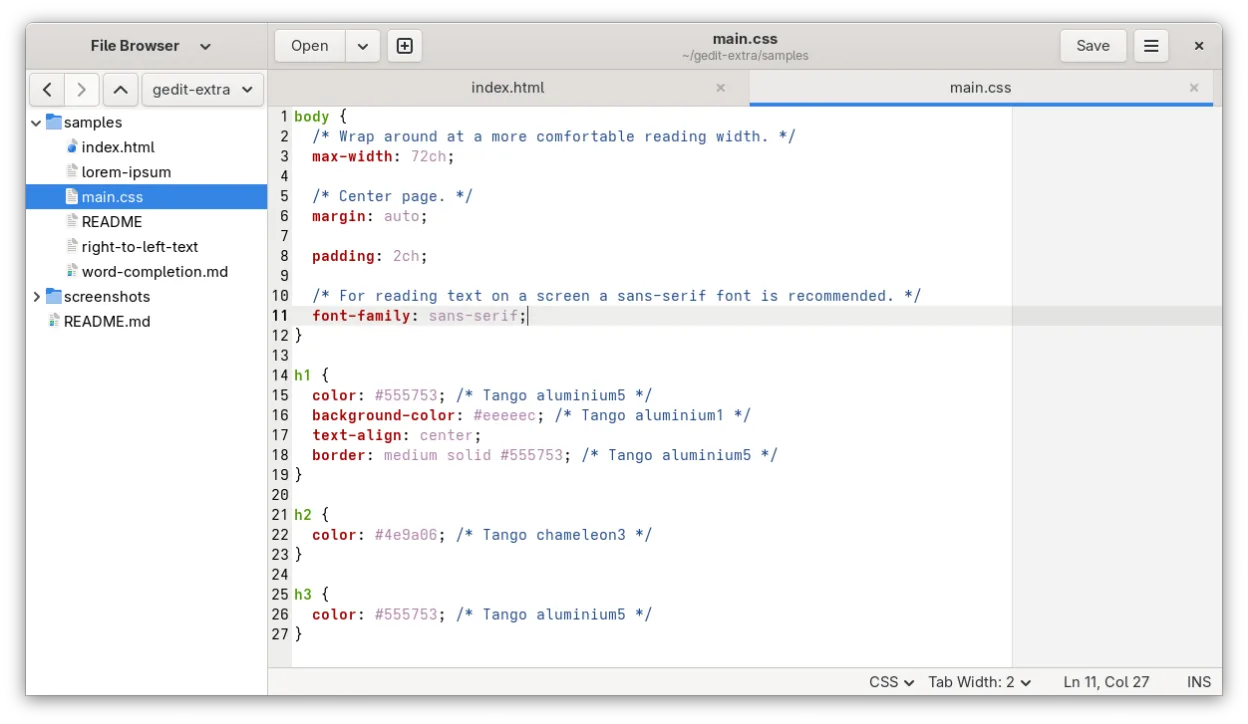
- Both support syntax highlighting for many programming languages.
- Both are free, open-source text editors available on Linux.
- Both support search and replace operations.
- Both allow basic configuration of font and tab settings.
What is different
- gedit lacks modal editing; it is a standard insert-mode GUI editor.
- Vim has a massive plugin ecosystem and terminal interface; gedit is GUI-only with limited plugins.
- Vim offers highly efficient, keyboard-centric text manipulation; gedit relies more on mouse and standard shortcuts.
- Vim is highly configurable via Vimscript/Lua; gedit configuration is limited to GUI preferences and basic plugins.
Opening your Vim files
gedit opens and saves plain text files (.txt, .md, .py, .c, etc.) without issue, which covers the vast majority of files edited in Vim. It does not read or write Vim-specific project files like .viminfo or .vimrc, but these are configuration files, not content. If you use Vim for binary or specialized formats, gedit will not handle them. For standard code and text, compatibility is complete.
Switching from Vim to gedit, step by step
- Install gedit via your package manager or Flathub.
- Adjust font size and tab width in gedit preferences to match your Vim setup.
- Enable line numbers and auto-indent in gedit settings.
- Install syntax highlighting plugins if needed for specific languages.
- Accept that you will need to relearn editing using mouse and standard shortcuts, as modal commands are unavailable.
Key features of gedit
- Syntax highlighting for many programming languages
- Plugin system for extending functionality
- Search and replace with regex support
- Configurable font, tab width, and line wrapping
- Line numbers, bracket matching, and auto-indent
- UTF-8 text encoding support
- Drag-and-drop text editing
- Multiple document interface with tabs
How to install gedit on Linux
flatpak install flathub org.gnome.geditsudo apt install geditsudo apt install geditsudo dnf install geditsudo pacman -S geditsudo zypper install geditFrequently asked questions
Can I use Vim keybindings in gedit?
No. gedit does not have a native Vim emulation mode. You can use standard GNOME shortcuts, but you cannot replicate Vim's modal workflow.
Is gedit suitable for heavy software development?
It is suitable for light editing, notes, and quick fixes. For heavy development requiring complex refactoring, terminal integration, or advanced plugins, gedit is too limited compared to Vim or IDEs.
Does gedit support regex search?
Yes, gedit supports regular expressions in its search and replace dialog, similar to Vim's search capabilities.
4 other alternatives to Vim
 NeovimNeovim is a modern Vim fork that adds extensibility, advanced UI support, and powerful extensions while…Open sourceFreeFlatpakNeovim vs Vim
 HelixHelix is a fast, Rust-based terminal text editor with modal editing, multiple selections, and built-in LSP…Open sourceFreeFlatpakHelix vs Vim
 GNU EmacsGNU Emacs is a highly extensible text editor and Lisp interpreter that functions as a complete development…Open sourceFreeFlatpakGNU Emacs vs Vim
 KateKate is a feature-rich, programmer-focused text editor from KDE with support for 300+ languages and advanced…Open sourceFreeFlatpakKate vs Vim