
Windows · Office
Best Linux alternatives to Microsoft Money
Microsoft Money was a Windows‑only personal finance manager that is no longer supported.
Updated
Quick answer
The best Linux alternative to Microsoft Money is GnuCash. Other strong options: KMyMoney, HomeBank, Skrooge.
4 Linux alternatives to Microsoft Money
-

Free, open‑source double‑entry accounting for personal and small‑business use.
GnuCash can replace Microsoft Money for most personal‑finance users who need to track multiple bank accounts, credit cards, budgets and generate standard reports. It offers double‑entry bookkeeping, recurring transactions, and a wide range of import/export formats, which covers the core tasks of…
Feature parity85% -

KMyMoney is a free, double‑entry personal finance manager for Linux.
KMyMoney is a solid Linux alternative for most Microsoft Money users. It offers double‑entry bookkeeping, multi‑account handling, budgeting, recurring transactions and a good set of reports, so anyone who used Money for personal finance will feel at home. The main limitation is the lack of native…
Feature parity78% -
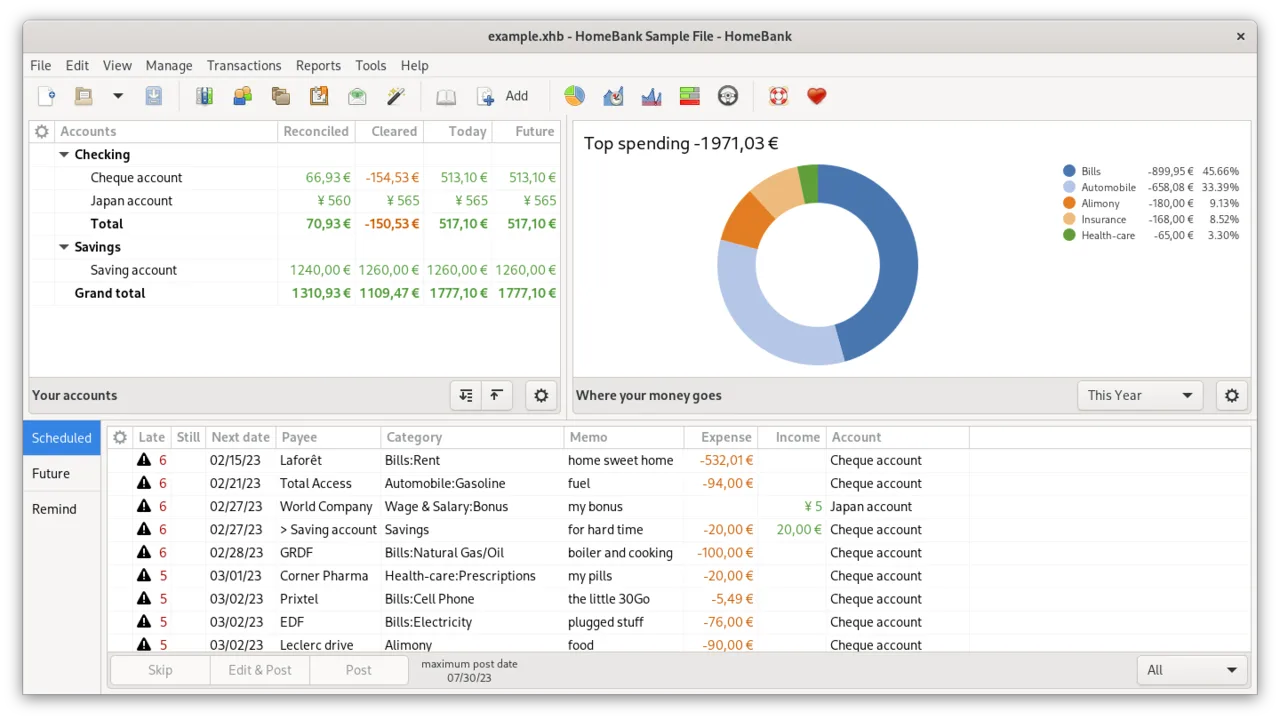
HomeBank is a free, open‑source personal finance manager for Linux.
HomeBank is a solid, free replacement for Microsoft Money if you need core accounting features without paid subscriptions. It handles multiple accounts, budgets, and generates useful reports like cash flow and expense trends. It is best for users who value open-source software and do not require…
Feature parity85% -
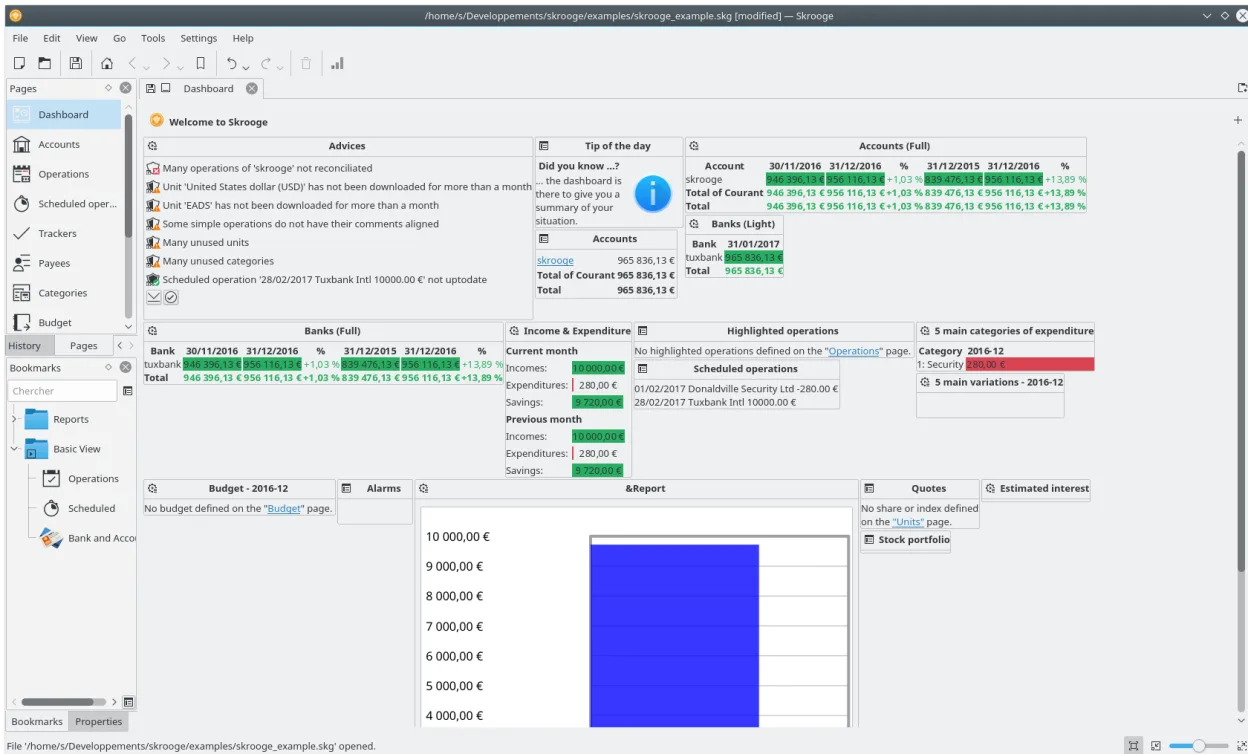
Skrooge is a KDE‑based personal finance manager for simple bookkeeping on Linux.




What is Microsoft Money?
Microsoft Money let users track bank balances, create budgets and record expenses. It was aimed at homeowners, small business owners and anyone who needed a simple way to manage personal finances on a PC. The software was sold as a commercial product until 2009, after which a free Microsoft Money Plus Sunset version was released to allow file opening but without online services.
Because Microsoft Money is discontinued, users looking for a Linux replacement need a program that can read the old .mny files and provide similar budgeting, account tracking and reporting features. Linux users also prefer open‑source, free tools that run natively on their desktop.
The Linux alternatives listed—GnuCash, KMyMoney, HomeBank, and Skrooge—are all mature projects that can import Microsoft Money data and offer comparable functionality.
What a replacement for Microsoft Money must do
- Import Microsoft Money (.mny) files
- Track multiple bank accounts and credit cards
- Create and manage budgets
- Generate reports (cash flow, profit/loss, balance sheet)
- Support for recurring transactions
- Export to common formats (CSV, QIF)
Can you run Microsoft Money on Linux?
All four listed tools run natively on Linux. GnuCash, KMyMoney and Skrooge are available in major distributions’ repositories and can be installed via package managers. HomeBank also ships in repositories and works well on X11 and Wayland. None of them rely on Wine or Proton; they are written in C/C++ or Qt and run directly on Linux.
Which alternative should you choose?
GnuCash is best for users who need double‑entry accounting and a wide range of reports. KMyMoney offers a more traditional personal‑finance interface with strong import/export support. HomeBank is lightweight and simple, suitable for users who want a quick setup and basic budgeting. Skrooge is ideal for those who prefer a Qt‑based interface and want a balance between features and simplicity.
Moving your Microsoft Money files and habits
Microsoft Money data can be exported from the original program as CSV or QIF files. GnuCash and KMyMoney can import these formats directly. HomeBank and Skrooge also support CSV imports, though some manual mapping of columns may be required. After import, users should verify account balances and transaction dates.
Side-by-side comparison
Microsoft Money: frequently asked questions
Is Microsoft Money Plus Sunset still available?
Yes, Microsoft released Money Plus Sunset in 2010 as a free download that can open and edit existing Money files but it no longer offers online banking or support.
Can I use Wine to run Microsoft Money on Linux?
While it is technically possible to run the Windows version under Wine, it is not recommended for day‑to‑day use because of stability and security concerns. A native Linux alternative is preferable.
Do the Linux alternatives support budgeting?
All four alternatives provide budgeting tools, though GnuCash and KMyMoney offer more advanced budgeting features compared to HomeBank and Skrooge.
Can I sync my accounts online with these Linux tools?
Only GnuCash and KMyMoney have optional online banking integrations; HomeBank and Skrooge rely on manual imports or local data files.
How important is Microsoft Money to you?
Know a better alternative? Suggest an alternative