
Windows · Others
Best Linux alternatives to GnuCash
GnuCash is a free double‑entry accounting program for personal and small‑business finance.
Updated
Quick answer
The best Linux alternative to GnuCash is KMyMoney. Other strong options: HomeBank, Ledger, Skrooge.
4 Linux alternatives to GnuCash
-

KMyMoney is a free, double‑entry personal finance manager for Linux.
KMyMoney is a strong replacement for GnuCash if you are comfortable with the KDE desktop environment. It handles double-entry bookkeeping, account hierarchies, and scheduled transactions effectively. The interface is generally considered more approachable for non-technical users than GnuCash’s…
Feature parity85% -
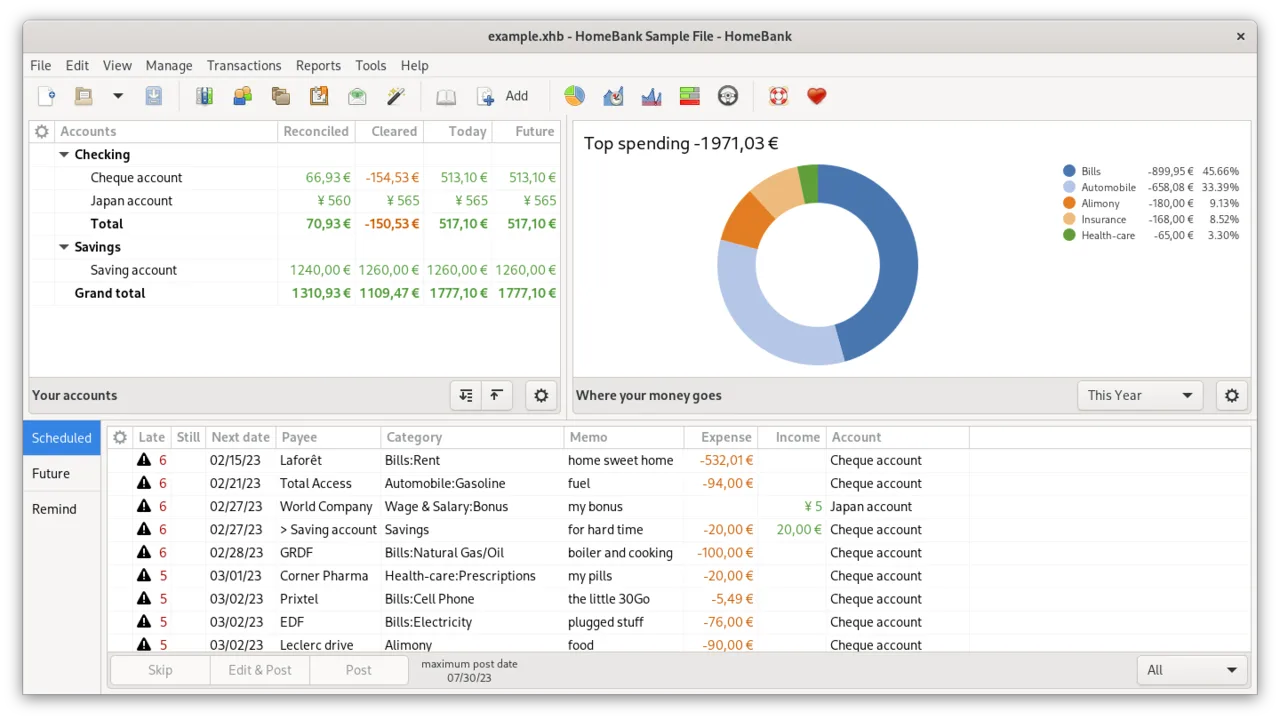
HomeBank is a free, open‑source personal finance manager for Linux.
HomeBank can replace GnuCash for users who need personal‑finance tracking and basic double‑entry bookkeeping. It covers the essential features—multiple accounts, transaction imports, budgeting and simple reports—while offering a cleaner UI and stronger filtering. It falls short for small‑business…
Feature parity68% -
Ledger is a plain‑text double‑entry accounting tool for the command line.
Ledger can replace GnuCash for users who prefer a lightweight, command‑line workflow and are comfortable editing plain‑text files. It delivers full double‑entry bookkeeping, scheduled transactions, multi‑currency handling, and basic reports. However, it lacks a graphical interface, intuitive…
Feature parity75% -
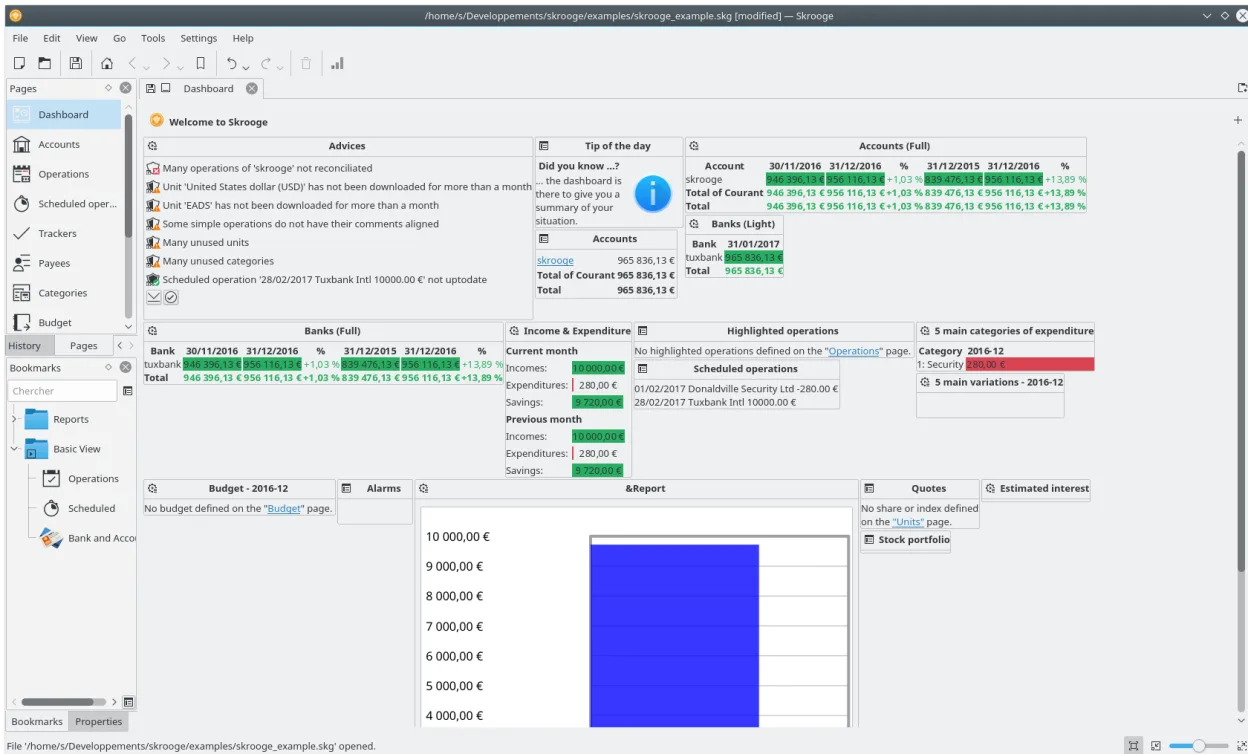
Skrooge is a KDE‑based personal finance manager for simple bookkeeping on Linux.
Skrooge can replace GnuCash for users who need a simple, single‑entry bookkeeping tool with good import/export options and a visual interface. It covers most everyday tasks such as tracking income, expenses, budgeting, and generating reports. However, it lacks true double‑entry bookkeeping, which…
Feature parity70%


What is GnuCash?
GnuCash is a desktop accounting tool that lets individuals and small businesses track income, expenses, assets and liabilities using double‑entry bookkeeping. It supports multiple accounts, scheduled transactions, and basic reporting, making it suitable for anyone who needs a simple yet thorough financial record.
The software is released under the GPL, so it is free to download, use and modify. There are no hidden fees or subscription tiers; you get the full feature set out of the box.
People often look for a Linux alternative when they want a native Linux experience, better integration with their desktop environment, or to avoid running Windows‑only software through compatibility layers.
What a replacement for GnuCash must do
- Double‑entry bookkeeping
- Multiple account types and hierarchies
- Scheduled/recurring transactions
- Basic financial reports (balance sheet, income statement)
- Import/export of common formats (QIF, OFX, CSV)
- Multi‑currency support
- Simple user interface for non‑accountants
Can you run GnuCash on Linux?
GnuCash has a native Linux version that is packaged in most major distributions, so you can install it directly from your distro’s repositories. There is no official web version. Running the Windows build via Wine or similar layers is possible but unnecessary because the native Linux build is fully functional.
Which alternative should you choose?
If you need a full‑featured GUI similar to GnuCash, KMyMoney is the closest match. HomeBank is great for personal finance with an easy‑to‑learn interface. Skrooge offers strong reporting and budgeting tools for power users. Ledger is a command‑line driven system for those comfortable with text‑based accounting.
Moving your GnuCash files and habits
GnuCash can export data to QIF, OFX and CSV, which are widely supported by the listed alternatives. Import those files into KMyMoney, HomeBank, Skrooge or Ledger to retain most transaction history. Minor adjustments may be needed for account hierarchies or custom fields.
Side-by-side comparison
GnuCash: frequently asked questions
Is GnuCash still actively maintained?
Yes, the project receives regular updates and bug fixes, focusing on compatibility with modern desktop libraries.
Can I use GnuCash for a small business with invoicing?
GnuCash includes basic invoicing and accounts‑receivable features, but it is not as specialized as dedicated ERP systems.
Do I need to be an accountant to use GnuCash?
No, the interface is designed for non‑professionals, though some accounting concepts help.
Is there a mobile app that syncs with GnuCash?
There is no official mobile client; users typically export data and view it on other devices.
How important is GnuCash to you?
Know a better alternative? Suggest an alternative